
Established market research has always been the primary pillar of business strategy, and it does have such limitations. It can take months to develop and administer surveys, and focus groups are costly and limited by geography. The task of processing huge volumes of data using large numbers of analysts to keep the resources crunching 24 hours a day is outrageous. It can be time-consuming, expensive, and narrow in scale, thus providing answers that might be out of date by the time they get to the decision-makers.
The world of artificial intelligence is essentially transforming this realm. Automating the collection of the data, expediting the analysis, and revealing patterns that human researchers cannot detect because of human limitations to data analysis, AI is turning market research into a window into the future as opposed to a look into the past. Businesses now have access to tools that calculate millions of posts on social media in a few minutes, consumer behavior is predicted with new levels of accuracy, and focus groups are available near instantaneously across continents.
This guide will help you find out how AI technologies are transforming market research, learn about the most effective tools currently on the market, see the successful examples of their usage in different industries, and realize what the market research in this sphere looks like in the future. In case you are a marketing professional, business strategist, or even a researcher, this article will arm you with the knowledge to leverage the transformative capabilities of AI into market insights.
Also read: Best Digital Marketing Companies in Delhi
What is AI in Market Research?
Definition and Scope
In market research, AI denotes the use of artificial intelligence technologies to automate, improve, and speed up market research-based data collection, analysis, and interpretation. This includes, but is not limited to, automated survey design, data collection, powerful predictive modelling, and real-time sentiment analysis.
The scope extends far beyond simple automation. Artificial intelligence market research can analyze masses of unstructured data across various sources in real-time, draw complicated conclusions on a large-scale dataset, and create proactive solutions at a pace that human analysts cannot. It changes market research from an occasional exercise into a dynamic action that is continuous and gives real-time intelligence.
AI Technologies Used
Natural Language Processing (NLP) allows machines to detect and render human language interpretation, which is why responses to open-ended surveys, social media posts, customer reviews, or even transcripts of focus groups can be examined. More sophisticated NLP can identify sentiment, emotion, and intent, even sarcasm, in text-based data.
Machine Learning (ML) algorithms process historical data and use it to formulate patterns and predict future consumer behavior. They keep on getting more accurate with each bit of data that they process, growing in the sophistication with which they can anticipate the market trend and consumer opinion.
Predictive analytics is a combination of statistical methods and machine learning to predict the future based on past information. In market research, it may include forecasting the rate of uptake of products, customer attrition, or changes in market demands.
Computer vision scrutinizes visual forms, images, and videos and deduces the required knowledge. The technology can track brand visibility in social media imagery, the behavior of consumers in store, or the attitude toward a brand and analyze the images communicating the information.
Key Applications of AI in Market Research
Sentiment and Opinion Mining from Social Media
AI technologies are able to instantly examine posts on social media that number in the millions to reveal how consumers are feeling regarding a brand or a product. Such tools are more nuanced, as they detect not only basic sentiment but the emotions underlying this, e.g., excitement, frustration, or anxiety. It is also possible to trace the evolution of sentiment over the timeline and show important contributors who influence the discussion online. This assists companies in reacting promptly to problems, learning new trends, and gaining insights into the perception of the population.
Predictive Modeling of Consumer Behavior
AI may effectively forecast the consumer behavior of the future based on their previous purchases, their surfing patterns, and external measurements. The predictive models assist companies in understanding what customers will likely churn, what products could become popular, and how changes in the markets will affect the demand. The advantage is that the neural network improves as more data is fed into the system because it constantly learns with new information. This makes market research an active planning and growth tool and no longer a reactive tool.
Text Analytics from Open-Ended Survey Responses
Text analytics enabled by AI can sort through thousands of open-ended answers in a short period and with high accuracy. Natural language processing highlights frequently occurring themes, sentiments, and strange insights that human analysts would overlook. This increases the convenience in that more questions may be open-ended without compromising the analysis time and gaining more nuanced and rich responses. It also ensures more objective and consistent results.
Real-Time Chatbot Surveys and Virtual Focus Groups
AI chatbots can complete a customized survey that is conversational and responds depending on user input. Such bots work 24/7 across time zones and languages, allowing for high-scale and swift data gathering. The participants may be scattered across the world, but the instantaneous discussion analysis in real-time AI-powered virtual focus groups may determine the common themes as they appear. This is very cost-effective, widening the reach and speed.
Image and Video Recognition for Brand Monitoring
Computer vision AI can scan pictures and video footage on social sites and determine the logos, products, and visual surroundings. This enables the companies to know how their brand appears in user-generated content and also where they are losing visibility to their rivals. Even higher-end systems may pick up on facial expressions and body language to analyze emotional responses to advertising or products. This visual layer of analysis introduces a depth to market analysis that has been hard to record in the past on a larger level.
Benefits of Using AI in Market Research
Faster Data Collection and Analysis
AI speeds up the entire market research process. It takes minutes to analyze complex data sets and automates the data collection procedure across many different sources. Whereas it used to take weeks or months, now it only takes a few hours and assists businesses in responding to the changing market conditions and emerging opportunities in time.
Real-Time Decision Making
AI allows one to monitor the market and keep up with up-to-date information, while traditional research gives delayed results. Businesses are able to undo strategy, refine campaigns, and react to competition in real time and make decisions based on up-to-date information as opposed to old data.
Greater Accuracy and Consistency
AI uses the same analysis processes, and there is no bias or error in such processes. It identifies little patterns and connections in big data and may make more concrete and translationally extensive conclusions on the advancement of the market than a human.
Reduced Costs and Manual Labor
AI’s ability to automate data collection and data reporting helps reduce the cost of research and the amount of manual work. Advanced research is made accessible to smaller businesses, as they can conduct more studies or extract valuable insights on the same budget or without employing large research teams.
Scalability Across Regions and Datasets
Using AI tools, data can be analyzed within numerous languages, markets, and cultures. This will help international companies to use reliable research procedures and at the same time access the local wisdom, thus providing a global strategy along with regional fit.
Top 10 AI Tools for Market Research
1. Qualtrics XM
Website: https://www.qualtrics.com/
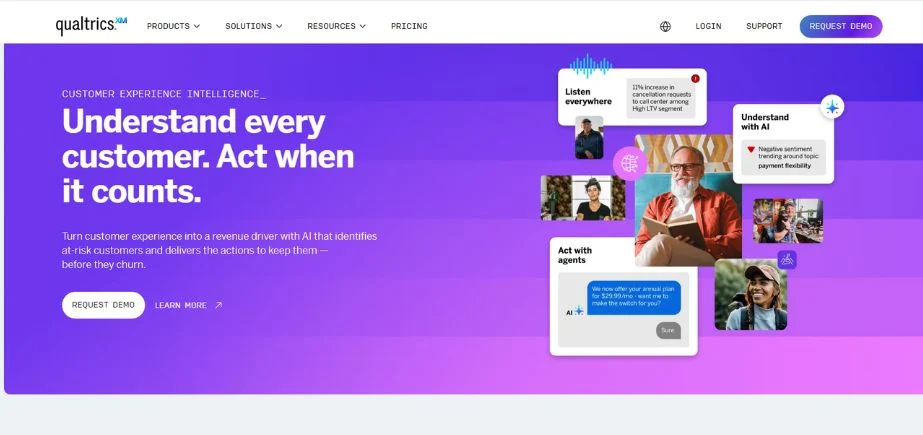
Qualtrics XM uses machine learning and AI to provide actionable insight in the form of customer, employee, product, and brand experiences. Its natural language processing functionality looks at open-text feedback at scale, identifying sentiment, trends, and other key topics.
Advanced predictive modeling predicts behaviors that have satisfaction or churn drivers. Real-time dashboards and automated notifications allow the business to respond immediately to fluctuations in the market and consumer demand. Its application is quite common across industries, and it is capable of quantitative and qualitative research of any scale.
2. Brandwatch
Website: https://www.brandwatch.com
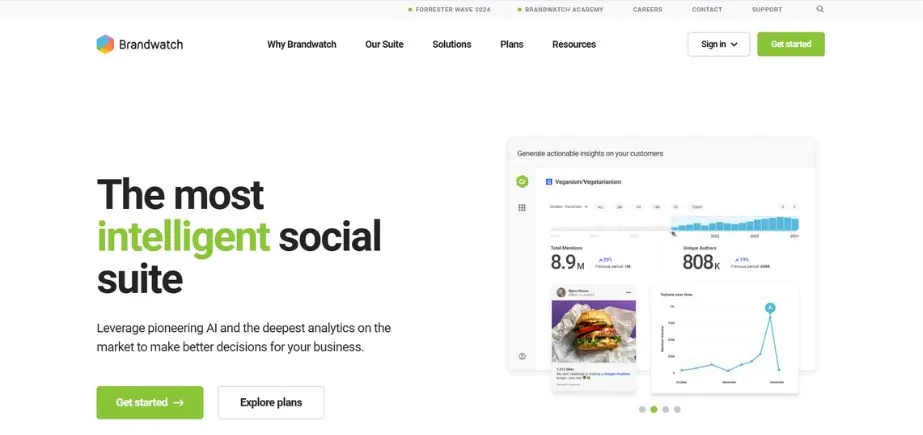
Brandwatch is an artificial intelligence-driven consumer intelligence platform that tracks the key sentiment, brand mentions, and emerging trends by analyzing social media, blogs, forums, and news outlets. It employs machine learning and natural language processing to give insightful information on the analysis of how consumers perceive it and how competitors are doing it.
Having the ability to create custom dashboards and also using the strong segmentation features allows the researchers to check brand health, monitor the performance of a specific campaign, and find influencers. Brandwatch is a competitive business tool that keeps companies ahead through powerful social listening and visual intelligence on digital communications.
3. Crayon
Website: https://www.crayon.co
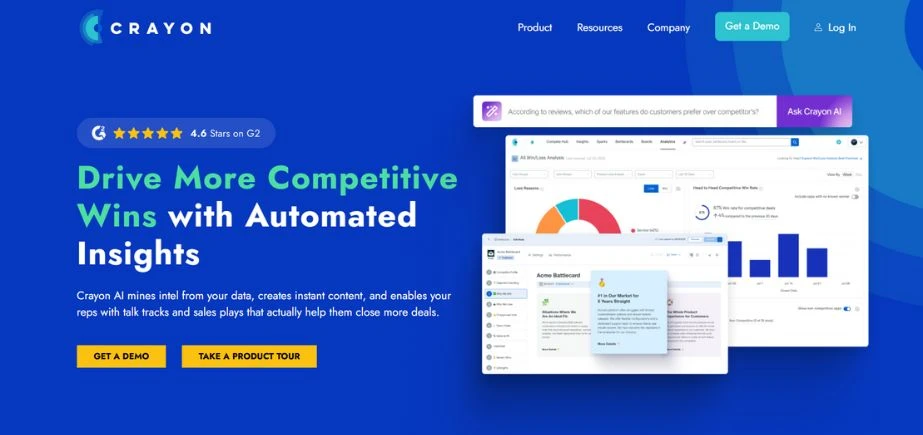
Crayon, a competitor intelligence tool powered by AI, enables real-time comparison of competitors according to changes in price, content, customer reviews, and edits. It constantly tracks millions of web sources to reveal operable data.
The machine learning algorithms of Crayon identify patterns, changes, and strategic shifts so that businesses have the ability to benchmark performance, hone messaging, and swerve competitors. It is particularly beneficial to marketing, product, and sales teams that want to remain agile in the dynamic markets.
4. Remesh
Website: https://www.remesh.ai
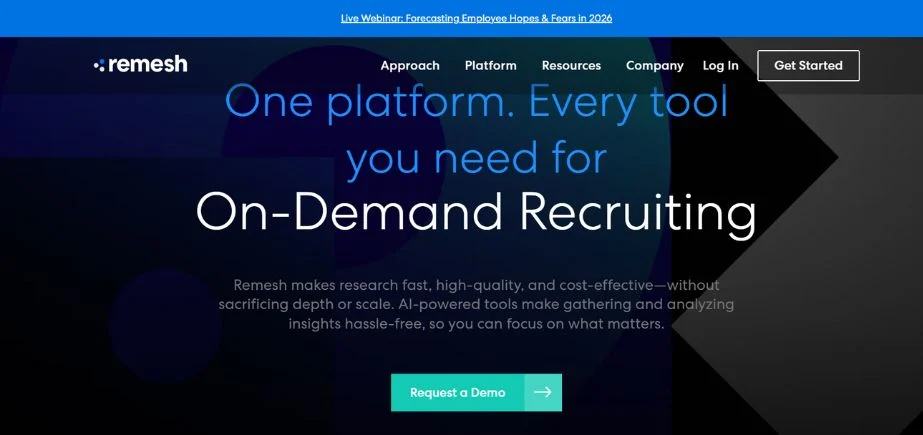
Remesh is an AI-based platform enabling real-time, large-scale qualitative research, simulating focus groups of a hundred participants at the same time. It enables analysis of the responses as they are received through natural language processing and lets you see the recurrent themes, opinions, and developing trends in real time.
The tool enables the moderators to delve deeper to build on real-time questions, and customization can be made depending on the response of the audience through questions. Remesh is also great in the realm of gaining various consumer insights within a very short time, thus a really effective method of both agile product development and agile marketing.
5. MonkeyLearn
Website: https://monkeylearn.com
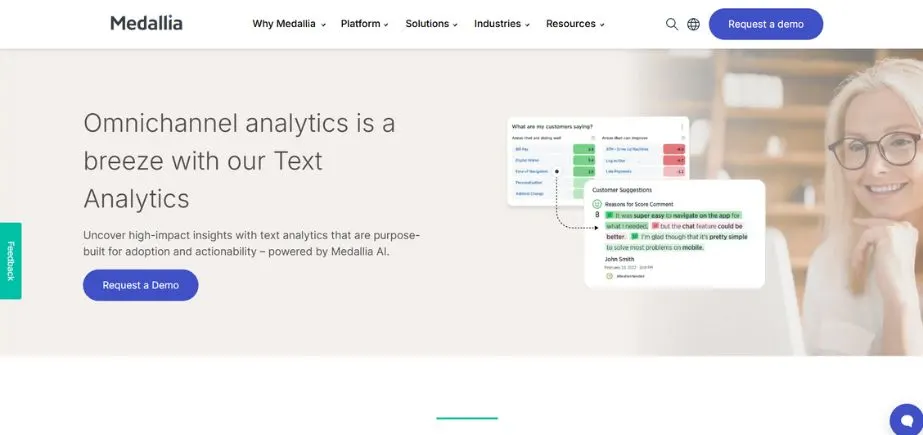
MonkeyLearn is one of the user-friendly machine learning platforms that are applied to text analysis, which is why the system allows companies to derive insights from customer feedback, reviews, and surveys. It provides solutions, including keyword search, keyword extraction, and classification, which do not require coding.
It is also ideal for market researchers, as it can reveal patterns, track brand sentiment, and trends in real-time. Its bespoke models and integrations with other platforms such as Google Sheets, Zapier, and Excel make its sophisticated AI-centric text analytics available to both large and small working groups.
6. SurveyMonkey Genius
Website: https://www.surveymonkey.com
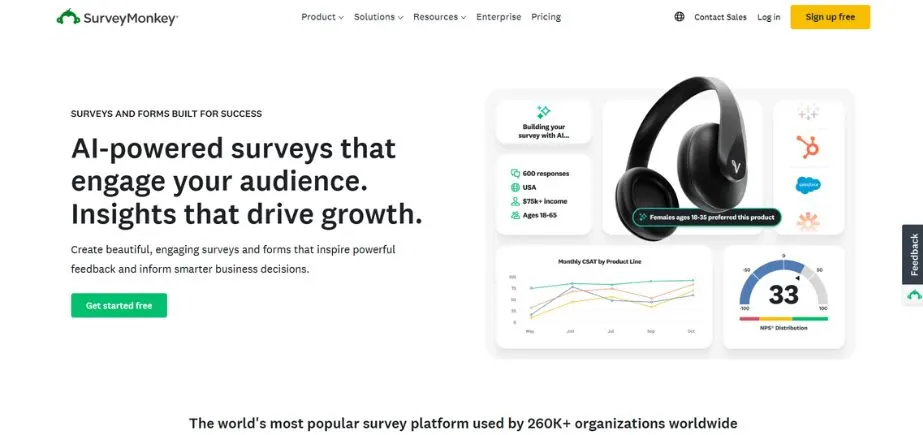
SurveyMonkey Genius uses AI to target better survey building by prompting the optimal wording of questions, their structure, and flow to increase engagement. It carries out real-time analysis of survey design, thus providing advice on how to maximize response rates in order to provide superior quality data. The instrument can also forecast possible prejudices and make the targeting strategy more precise.
The use of AI in surveys with SurveyMonkey, a strong survey platform, will enable the researchers to deliver more efficient surveys, obtain practical insights in a shorter time, and eliminate the laborious guesswork in the process of designing surveys, making the market research operation more precise and informative in the end.
7. Talkwalker
Website: https://www.talkwalker.com
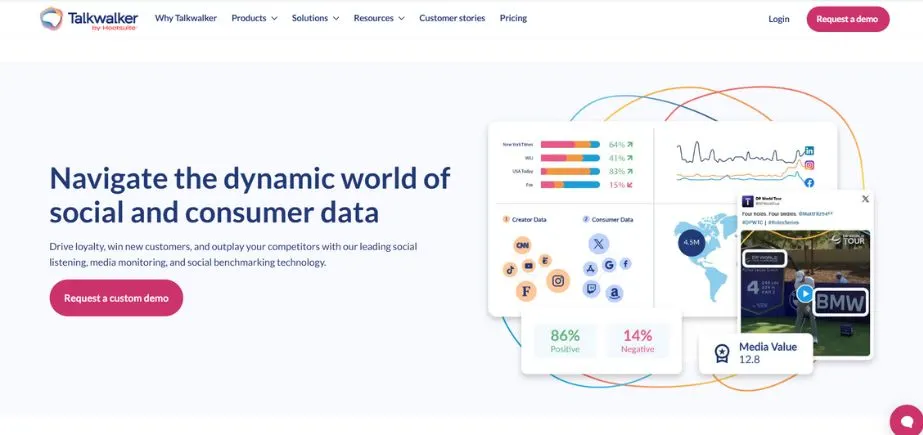
Talkwalker is a major social listening and analytics system driven by artificial intelligence that assists companies in keeping track of their brand mentions, observing competitive moves, and studying trends both on and offline. It has AI-augmented image recognition and emotion analysis capabilities that have more in-depth access to what consumers are saying beyond the written word.
Talkwalker has more than 150 million sources in almost all languages, so that the market researchers could use it to detect new trends, track campaigns, and make accurate decisions based on the data. It also has customizable dashboards and alerts to spot strategic marketing and brand positioning in time.
8. Statista AI
Website: https://www.statista.com
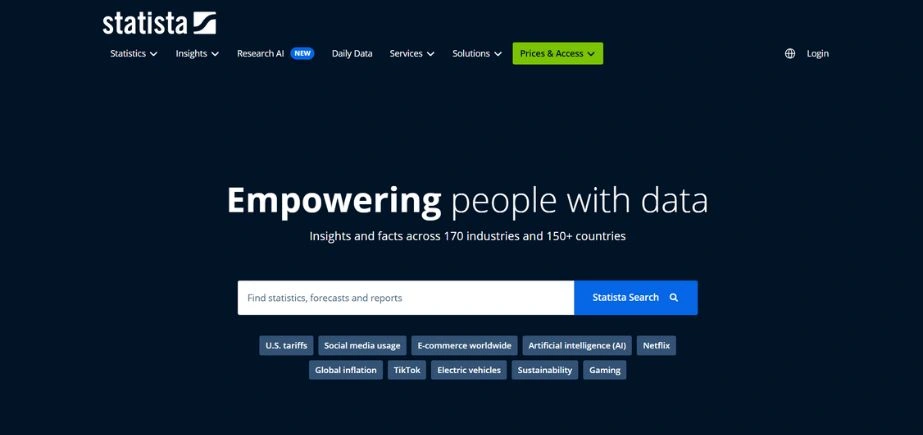
Statista AI turns the comprehensive global market and industry database of the platform into a smart search and analysis system. It is helping users find the relevant datasets faster, analyze complex statistics, and see trends in the market. The AI features enable the researchers to provide visualizations, summarised conclusions, and cross-compare numerous sources of data to get more insights.
With access to high-quality validated data being condensed through Statista AI, more accurate forecasts and decision-making in strategic situations can thereby be made. It is particularly useful to companies that require in-depth data-driven market intelligence but do not have the resources and time to conduct a comprehensive manual study.
9. ChatGPT (OpenAI)
Website: https://chat.openai.com
ChatGPT is one of the AI language models developed by OpenAI and is employed extensively in market research to conduct functions such as designing surveys, restructuring questionnaires, and synthesizing reports, among others. It is capable of analyzing qualitative data, writing competitor analysis reports, and even undertaking a simulation of consumer personas.
Through the ability to analyze large text data within a short time frame, ChatGPT assists analysts in finding themes, trends, and recommendations that can be implemented. It can be used to enhance productivity and the richness of the research findings due to its flexibility and its being integrable with workflows.
10. Tableau with Einstein Analytics
Website: https://www.tableau.com
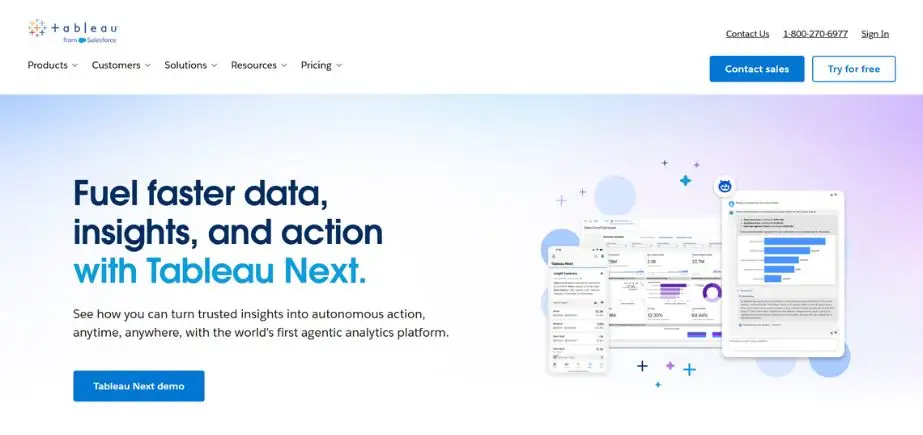
The combination of Salesforce Einstein Analytics within Tableau delivers the benefits of sophisticated AI-powered analytics together with an industry-leading data visualization platform. Such synergy will help market researchers unearth latent trends, foresee trends, and make sound business decisions based on real-time analytics.
Predictive modeling capabilities of Einstein expand Tableau dashboards, and thus users can move beyond stagnant reporting into actionable foresight. Whether studying customers, market, or campaign performance, the platform merges the features to provide a complete picture of data, and therefore, is a primary tool in the AI-powered business intelligence and strategy planning.
Know More: Best SEO Reporting Software for Accurate Performance Insights
Challenges and Limitations
Data Privacy and Ethical Concerns
There are concerns about privacy encroachment as a result of AI-driven market research processing user information acquired by them on social media or the purchases made, as well as online communications, and tracked behavior. Regulations such as GDPR and CCPA require clear consent, and consumers are getting used to transparency. In addition to complying with the requirements, the companies have to demonstrate fairness, pay attention to the privacy rights, and implement powerful governance, consent mechanisms, and effective communication.
Risk of AI Bias and False Correlations
AI has the potential to compound biases in training data, resulting in biased/discriminatory insight. It can also identify correlations that are not actual causation, resulting in making bad decisions. The prevention of such should include a variety of data, frequent checks of bias, and human supervision to confirm results.
High Implementation Costs for Small Businesses
Although AI has the capacity to reduce the costs of research in the long run, its installation process requires significant investments in technology, infrastructure, and skills. The costs of data integration, training, and maintenance may be prohibitive in the case of small firms, thus giving larger firms an upper hand.
Lack of Human Nuance in Qualitative Analysis
AI can detect patterns fast; however, it could lack cultural, emotional, or contextual nuances. Human scientists bring intuition, creativity, and cultural awareness to it, and therefore, AI combined with humans is most effective.
Conclusion
With AI, market research is becoming more constant and is used as an intelligence system in place of a periodic and retrospective task. Businesses can now acquire insights and make decisions in real-time, enhance accuracy, achieve greater scalability, and achieve faster decision-making through the use of natural language processing, machine learning, computer vision, and predictive analytics. Its business capabilities enable companies using such tools to predict the trends, react promptly to consumer demands, and adjust their strategies based on real-time information.
Whether it is Qualtrics experience management, Brandwatch social intelligence, Remesh insider qualitative information, or the analytical flexibility of ChatGPT, AI tools are breaking down the door wide open to possibilities that were unimaginable just a few years back. Nevertheless, adoption presents certain challenges that will have to be addressed, such as the privacy of data, bias in their algorithms, cost to implement, and the necessity of human interpreting capabilities.
The future is a combination of the data processing capability of AI (and the human intuitiveness and knowledge of context). In the fast-evolving markets, the first mover will prevail in having a competitive sustainability advantage over others who will lag behind in the market intelligence race.
FAQs
1. What are the benefits of AI tools in enhancing the correctness of market research?
The AI tools will also use large, diverse datasets in real time, minimize human error, and identify the patterns that can be overlooked using manual approaches.
2. Is it possible to substitute human researchers in market research with AI?
Not at all. AI improves efficiency and insights of analysis, but human expertise is necessary to provide a context, interpretation, and drive into strategic decision-making.
3. What are the kinds of data that AI tools should analyze as far as market research is concerned?
They are able to handle both structured data, such as sales figures, and unstructured data, such as social media posts and reviews, images, and videos.
4. Do AI-driven market research tools cost more than their competitors?
Prices are high and low in different directions, so it is possible to find affordable subscriptions and platforms of enterprise level, which can be quite expensive.
5. What are the principal limitations of applying AI to market research?
The most critical obstacles are the questions of data privacy, bias of algorithms, the process of integrating it with other systems, and the requirement for qualified analysts.
Continue Exploring: Best WhatsApp Marketing Software
