In any company, performance appraisal plays a very significant role in the management of employees. It enables managers to know the performance of their team members at the workplace. The most appropriate performance appraisal tools facilitate making this process easy and simple for all. In 2026, one will be able to find a lot of excellent tools that can assist a company in reviewing its employees appropriately.
These tools are beneficial assistants that monitor the work of the employees, establish goals, and provide feedback. With the help of the best appraisal tools, time is saved, and the process of review is quite fair to all. These tools are used by big corporations as well as small start-up companies to enable their workers to improve and be better workers.
This article will discuss the superior appraisal tools in 2026. We will describe what make them good and assist in selecting the correct one in your company. There is an ideal tool with 10 employees or 10,000 employees.
What to Look for in Performance Appraisal Tools
In selecting the most effective performance appraisal tools there are a few key issues that you should consider:
- User friendly – The tool must be easy to use to ensure that all people can use it without any confusion or issues with training.
- Goal Setting Features – It is supposed to aid the employees and managers in setting achievable goals and monitor progress easily.
- Feedback Options – The tool should be able to enable constant feedback of both the managers and the team members on a regular basis.
- Reports and Analytics – It ought to come up with simple reports that display the performance of the employees in a clear and fast manner.
- Integration Capability – The tool must be integrated with other programs that are already used by your company daily.
Key Features to Look for in Performance Appraisal Tools
The most useful performance appraisal tools possess the following important features:
- 360-Degree Feedback – This allows all people to provide feedback such as managers, peers as well as employees themselves.
- Review Templates that are customizable – You can modify review forms to suit your company to the latter.
- Mobile Access – The tool can be used by the employees and managers at any time and at any place where mobile phones are available.
- Automated Reminders – Automated reminders help the system to notify all the people against forgetting their review deadlines.
- Performance Tracking – It follows the progress of employees over time with its achievements and places that require improvement.
Read More: Top Startup Companies in Coimbatore
10 Best Performance Appraisal Tools in 2026
1. BambooHR
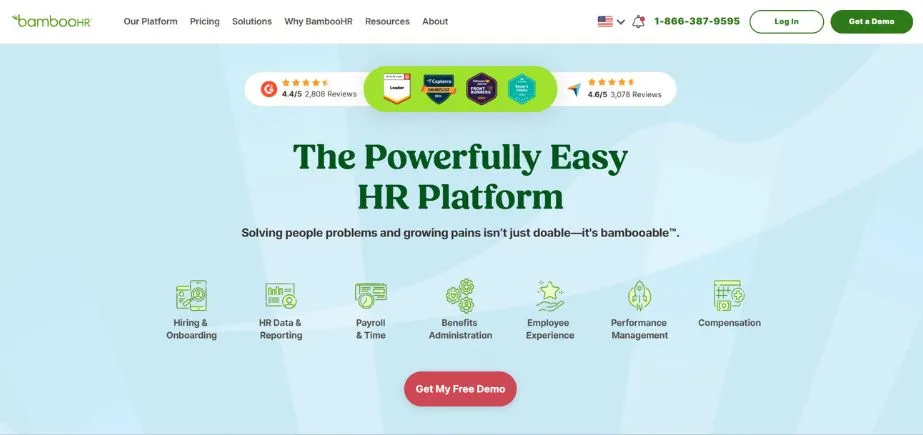
BambooHR has been ranked as one of the most suitable performance appraisal tools in small and medium companies. It simplifies and makes the management of employees very easy. The tool is of a clean design that anybody can grasp easily. With the help of BambooHR, all types of data related to employees can be tracked, time off can be controlled, and performance assessments can be conducted. The fact that it is not complex makes it beloved by many companies.
This software is ideal for use by those companies that desire something simple and yet great. It is not a newcomer that BambooHR has been assisting business in managing their employees. Each year, it is getting better with new features.
Key Features
- Plug and Play performance appraisal templates.
- Self-service portal for employees.
- Personalized reporting and analytics.
Pros
- Very simple to use
- Great customer support team
- Small companies can afford it.
Cons
- Lack of sophisticated features.
- Not suitable for massive corporations.
- Other integrations are more expensive.
Best For: Small businesses
Pricing: Starts at $6.19 per employee per month
Website: https://www.bamboohr.com
2. Workday
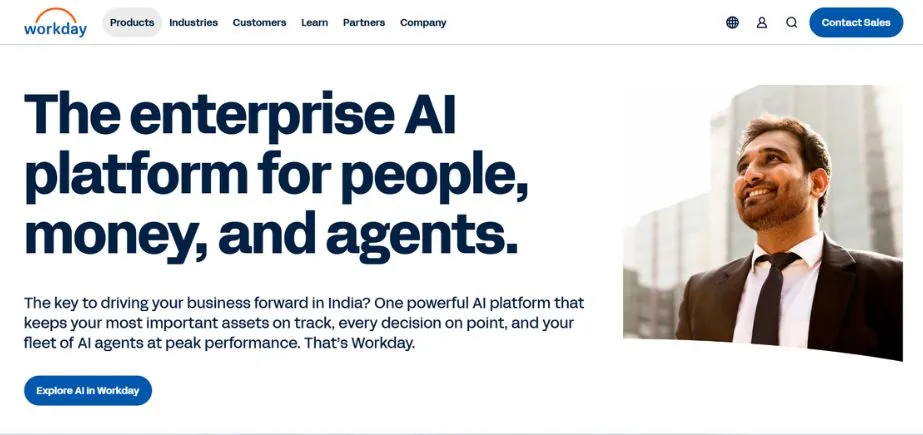
Workday is an efficient performance management software that is applicable in large corporations across the globe. It provides holistic solutions to the management of human resources and employees. The tool is highly developed with very developed features which assist large organizations to handle thousands of workers without any difficulties.
Workday is a unified system of payroll, benefits, time tracking, and performance reviews. It applies intelligent technology to provide data on employee performance. It is a highly secure and reliable system in terms of managing sensitive employee information. Many corporations are Fortune 500s that rely on Workday to address their HR requirements. It is constantly updated with new features and improvements.
Key Features
- Developed analytics and reporting.
- Continuous performance management system.
- Full-fledged talent management package.
Pros
- Quite strong and extensive.
- Easy in big organizations.
- Great security provisions were provided.
Cons
- Too costly for small companies.
- Requires training to use
- Can be complex initially
Best For: Enterprises
Pricing: Custom pricing based on company size
Website: https://www.workday.com
3. Lattice
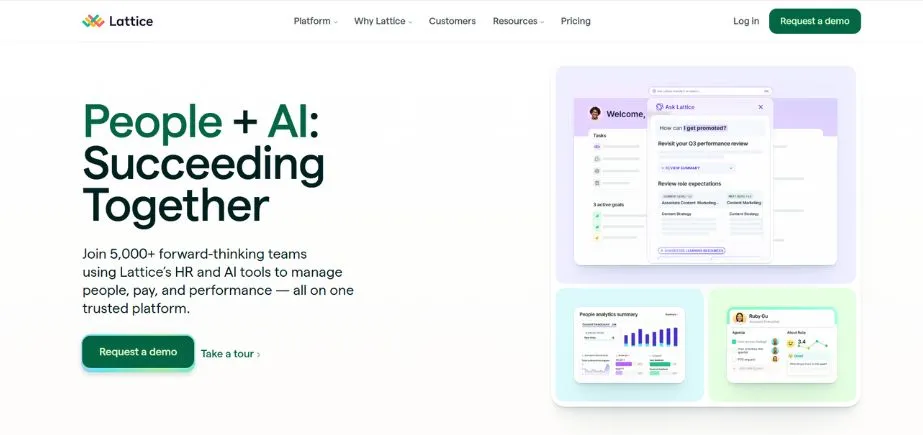
One of the most efficient performance appraisal tools that revolves around continuous feedback and development of the employees is lattice. It assists firms in the establishment of good performance cultures in which feedback occurs frequently. The tool eases managing and communicating with employees to have meaningful work-related conversations. Lattice also has goal setting, feedback, one-on-one meetings, and performance reviews.
The interface is contemporary and highly user-friendly. Lattice indicates higher levels of employee engagement and satisfaction in companies that use Lattice. The instrument assists in ensuring that individual goals are aligned with the company’s objectives. It promotes frequent visits between the team and managers. Lattice is a good option when a company is committed to constant communication and annual reviews.
Key Features
- Constant communication and appreciation.
- OKR and goal tracking
- One-on-one meeting templates
Pros
- New and usable interface.
- Good employee engagement tool.
- Good goal tracking capabilities.
Cons
- Can be pricey
- Certain features are overwhelming.
- Poorly customized reports.
Best For: Mid-sized-companies
Pricing: Starts at $11 per person per month
Website: https://lattice.com
4. 15Five
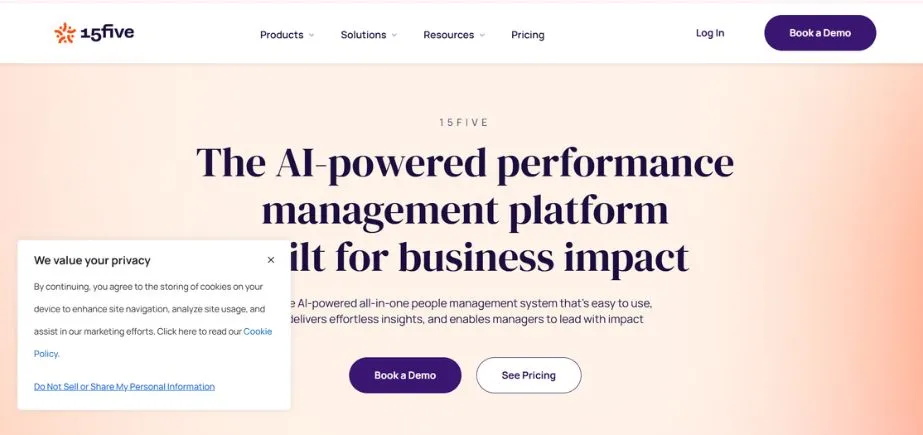
15Five is one of the finest performance appraisal tools that is based on week-by-week check-ins and real-time feedback. It was named so because of the concept that it takes 15 minutes to respond to questions by the employees and 5 minutes to respond by the managers. The tool assists managers in keeping in touch with their team members regularly.
It has weekly check-in features, objective tracking, and performance review. 15Five is convinced that frequent communication contributes to performance improvement and employee happiness. The instrument is highly uncomplicated and does not need a lot of training. Several businesses have increased employee satisfaction following the utilization of 15Five.
Key Features
- Weekly employee check-ins
- Objective and key results
- The following were the performance review features.
Pros
- Simple and quick
- Promotes frequent correspondence.
- Good for remote teams
Cons
- Limited advanced analytics
- Rudimentary reporting functionalities.
- The interface could be better
Best For: Remote teams
Pricing: Starts at $4 per person per month
Website: https://www.15five.com
5. SAP SuccessFactors
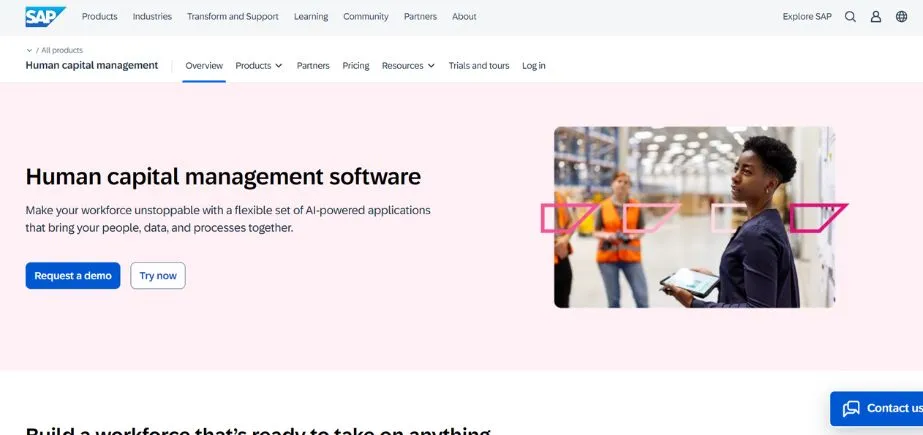
SAP SuccessFactors is an all-inclusive employee performance appraisal software in large corporations. It offers entire solutions to all human resources requirements, such as performance management. The tool is highly powerful, and it can deal with complicated business requirements with ease. These modules are recruiting, learning, compensation, and performance reviews, which are part of SuccessFactors. It applies modern technology to make suggestions and forecasts regarding the performance of employees. The system is compatible with other SAP products that the companies may be using. SuccessFactors is used by many companies in the world to conduct their HR activities.
Key Features
- Complete talent management suite
- Advanced analytics and AI
- Global compliance features included
Pros
- Very comprehensive solution
- Great for global companies
- Strong integration with SAP
Cons
- Very expensive pricing
- Complex implementation process
- Steep learning curve
Best For: Global-enterprises
Pricing: Custom pricing based on requirements
Website: https://www.sap.com/products/hcm.html
6. Performly
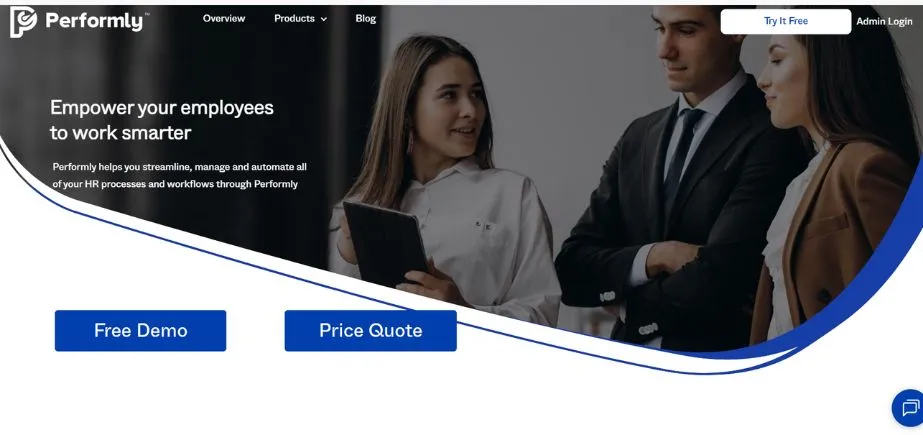
One of the most effective performance appraisal tools is performy, which is made to be simple. It concentrates on simplifying the process of performance review without having to create unneeded intricacies. The tool provides adjustable templates for review that suit various needs of companies. Performly has goal setters, feedback collection, and performance tracking capabilities. The interface is simple and clean, thus simple to use. It assists companies in shifting to continuous performance management as opposed to annual reviews. Performly is very useful in those companies that desire professional features without spending too much.
Key Features
- Types of templates available: Customizable review templates.
- Tracking and management of goals.
- Collected real-time feedback.
Pros
- Affordable pricing plans
- Easy to implement quickly
- Good customer support
Cons
- Fewer integrations are offered.
- Limited mobile app features
- Simple analytics functionality.
Best For: Growing-businesses
Pricing: Starts at $5 per employee per month
Website: https://www.performly.com
7. ClearCompany
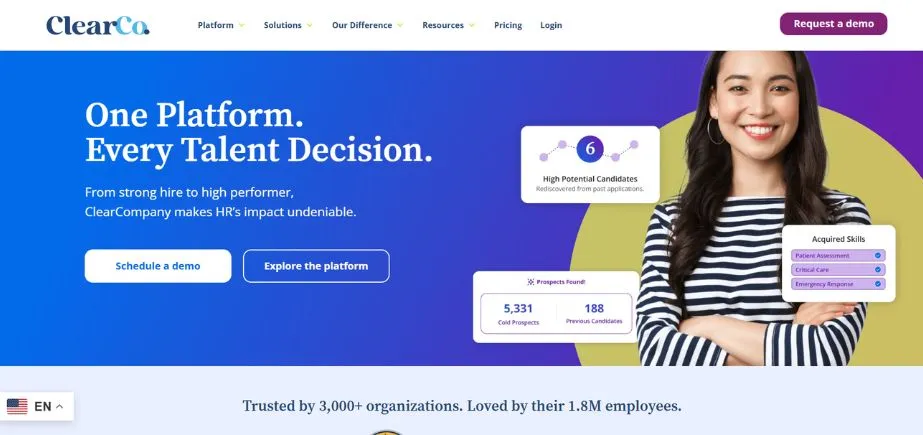
One of the most suitable performance appraisal tools that integrates recruiting and performance management is ClearCompany. It assists firms in the entire lifecycle of employees since they are hired and developed. The tool will consist of applicant tracking, onboarding, goal management, and performance reviews. ClearCompany is a firm that assumes that the performance of an individual should be matched with that of a firm. The system offers great transparency in the performance of the employees within the organization. It provides scalable workflows that are aligned with your business.
Key Features
- Whole talent management platform.
- Goal alignment and tracking
- Tailor-made workflows for performance review.
Pros
- All-in-one HR solution
- Quality goal alignment characteristics.
- Powerful job seeker managementis is encompassed.
Cons
- Can be expensive
- Slow customer service at times.
- Setup takes time
Best For: Complete-talent-management
Pricing: Custom pricing based on modules
Website: https://www.clearcompany.com
Explore This as Well: Best Startup Companies in Pune
8. Trakstar
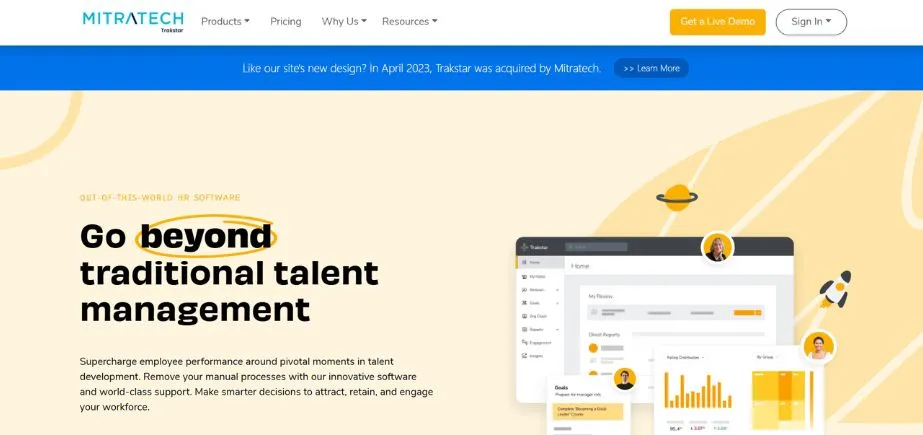
The Trakstar is a performance management system that aims at simplifying and making appraisals effective. It assists businesses in having equitable and consistent performance appraisals in all sectors. The tool provides adaptable templates of reviews that can be easily customized. In Trakstar, there are 360-degree feedback, goal tracking, and competency tests. The system is quite friendly, and it does not need a lot of training. It assists managers to provide superior feedback to their employees regularly. Trakstar has decent analytics to indicate the performance trend over time.
Key Features
- Flexible review templates
- 360-degree feedback capability
- Goal and competency tracking.
Pros
- Very affordable pricing
- Easy to customize
- Good for various industries
Cons
- The interface looks outdated
- Lack of choice of integrations.
- The mobile app should be enhanced.
Best For: Budget-conscious-companies
Pricing: Starts at $3600 per year
Website: https://www.trakstar.com
9. Namely

One of the best performance appraisal tools, as used by mid-sized companies, is namely. It integrates the functions of HR, payroll, benefits, and performance management together. The tool carries a contemporary interface, which is pleasant for employees to use. Scoring the points makes it easy to perform performance reviews and track employee development. It possesses goal settings, feedback collection, and performance tracking features. The system can be highly customized to fit the various company cultures and processes. Namely also accommodates social aspects in the development of company culture.
Key Features
- Full HR platform incorporation.
- Social recognition characteristics.
- Individualized performance review periods.
Pros
- New and interactive interface.
- Good for company culture
- Comprehensive HR solution
Cons
- Pricing is high
- Some features feel basic
- Customer support varies
Best For: Mid-market-companies
Pricing: Custom pricing based on features
Website: https://www.namely.com
10. Reflektive
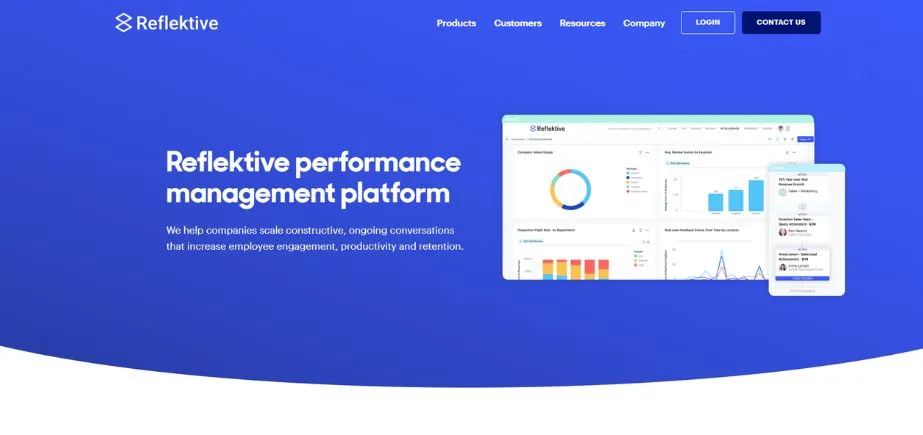
Reflektive is one of the most appropriate performance appraisal systems that is aimed at real-time feedback and recognition. It assists the companies to transition out of the old methods of performance management at the end of the year, over to ongoing performance management. The tool ensures that employees and managers can comfortably share feedback at any time.
Reflektive has goal tracking, reviews, check-ins, and employee recognition functionality. The platform promotes frequent discussions of performance and development. It can be implemented alongside such tools as Slack and Microsoft Teams, which are already implemented in companies. Reflektive offers decent analytics that can be used to find out the trends and problems related to performance.
Key Features
- Real-time feedback and recognition.
- Goal and OKR tracking
- The collaboration tools are integrated.
Pros
- Excellent when it comes to frequent responses.
- Modern user interface
- Good integration options
Cons
- Can be expensive
- Learning curve for features
- Reporting could be better
Best For: Feedback-focused-companies
Pricing: Custom pricing based on size
Website: https://www.reflektive.com
Comparison Table: Performance Appraisal Tools
| Tool | Best For | Starting Price | Key Strength |
| BambooHR | Small businesses | $6.19/employee/month | Easy to use |
| Workday | Large enterprises | Custom pricing | Comprehensive features |
| Lattice | Mid-sized companies | $11/person/month | Continuous feedback |
| 15Five | Remote teams | $4/person/month | Weekly check-ins |
| SAP SuccessFactors | Global enterprises | Custom pricing | Global compliance |
| Performly | Growing businesses | $5/employee/month | Affordable pricing |
| ClearCompany | Complete talent management | Custom pricing | All-in-one solution |
| Trakstar | Budget-conscious companies | $3600/year | Very affordable |
| Namely | Mid-market companies | Custom pricing | Modern interface |
| Reflektive | Feedback-focused companies | Custom pricing | Real-time feedback |
Common Use Cases of Performance Appraisal Tools
There are numerous ways of using the best performance appraisal tools:
- Annual Performance Reviews – These are employee assessment tools that companies employ to organize yearly employee performance reviews.
- Continuous Feedback – The managers provide continuous feedback to the employees on their work during the year.
- Goal Setting and Tracking – Organizations have specific goals and will use these review performance tools to monitor progress by tracking regularly.
- 360-Degree Feedback – The organisations seek their feedback through managers, peers ,and subordinates to have a thorough evaluation of employees.
- Employee Development Planning – These are used to develop development plans that enhance employee skills over time.
How to Choose the Best Performance Appraisal Tools
To choose the appropriate tool, you should think over in your company:
- Take into account Company Size – Select those tools that will be effective forr your specific number of employees.
- Check Your Budget – See what you can afford and select employee evaluation tools within your budget.
- Evaluate Features Needed – Compare with available features and make a list of features that are needed.
- User Experience – Use free trials to determine whether the tool is user-friendly.
- Check Integration Options – Check that the tool is integrated with the systems and software that you have.
Conclusion
The selection of the most appropriate performance appraisal tools is highly crucial when it comes to the success of your company. These tools are used to simplify the process of employee reviews, making them more objective and effective. Overall, numerous great alternatives would suit businesses of any scale in 2026. No matter whether you need a basic tool to manage a team of only a few people, or a detailed software for employee performance assessment to manage a big organization, you can find something. The most effective performance appraisal instruments will enhance the relationship between the employees and the managers. They reduce the stress and make the review process more fruitful.
Again, remember the company size, budget, and individual needs when making a choice. Take up free trial options and make the ultimate decision. The proper performance management system will be the one that will contribute to your employees and your company’s prosperity. The investment in the most effective appraisal tools will be a case of investing in your employees and the future of your company.
Frequently Asked Questions
Q1: What are performance appraisal tools?
The software programs used to assist the company in analyzing and assessing the performance of employees are called performance appraisal tools. They ensure that the review process is fair and organised.
Q2: Why do companies require the best performance appraisal tools?
The companies use the tools in order to save time, perform the reviews fairly, monitor the employees’ progress, and develop the workers’ skills and performance through wars and reskilling.
Q3: How much do performance appraisal tools cost?
The prices range extremely from $4 per person per month to personalized pricing for very large companies. The price is affected by the features and the size of the company.
Q4: Can small businesses use performance appraisal tools?
Absolutely, several tools like BambooHR and Performly are made just for small businesses with budget-friendly rates and easy-to-use features.
Q5: What is the difference between traditional and continuous performance reviews?
Traditional reviews happen once or twice a year, while continuous reviews involve regular feedback and check-ins throughout the year for better results.
Continue Exploring: Best Startup Companies in Hyderabad
