
Understanding what consumers say online is crucial for reputation management and brand expansion in today’s fast-paced digital environment. Businesses may track discussions, mentions, hashtags, and trends on various platforms in real time with the aid of social media monitoring tools. These technologies enable data-driven marketing decisions by offering insightful information about campaign performance, competition activity, and audience attitude.
From startups to large enterprises, organisations rely on social media monitoring solutions to engage proactively, manage crises, and measure brand impact effectively. Exploring the top social media monitoring tools allows marketers, agencies, and brands to identify the right platforms that align with their goals, budgets, and analytics requirements.
What Is a Social Media Monitoring Tool?
A social media monitoring tool is a digital solution designed to track, analyse, and manage conversations happening across social media platforms in real time. It helps businesses, marketers, and organisations monitor brand mentions, hashtags, keywords, competitor activity, and customer feedback from platforms such as Facebook, Instagram, X (Twitter), LinkedIn, and online forums.
By collecting and organising this data, the software provides valuable insights into audience sentiment, engagement trends, and content performance. Social media monitoring tools also support reputation management by alerting users to negative comments or emerging issues before they escalate.
Additionally, they assist in campaign evaluation, influencer identification, and customer service improvements. Overall, social media monitoring software enables data-driven decision-making, allowing brands to refine strategies, strengthen relationships, and maintain a positive online presence effectively.
How to Choose the Right Social Media Monitoring Tools
- Platform Coverage: Choose a tool that supports all major social networks relevant to your audience, including Facebook, Instagram, X, LinkedIn, YouTube, forums, and blogs.
- Real-Time Monitoring: Ensure the software provides real-time tracking and alerts so you can respond quickly to mentions, trends, or potential reputation issues as they arise.
- Analytics and Insights: Look for detailed analytics on engagement, reach, sentiment, and trends to help you understand audience behavior and measure campaign performance accurately.
- Sentiment Analysis: Select a tool with reliable sentiment analysis to identify positive, negative, or neutral conversations around your brand and make informed communication decisions.
- Ease of Use: A user-friendly dashboard with simple navigation saves time, reduces training effort, and allows teams to focus more on insights than technical complexities.
- Customisation Options: Choose software that allows custom keywords, hashtags, reports, and alerts to align monitoring closely with your brand goals and industry needs.
- Integration Capabilities: Ensure the tool integrates smoothly with CRM, marketing, analytics, and customer support platforms to streamline workflows and centralise data management.
- Pricing and Scalability: Compare pricing plans and scalability options to ensure the tool fits your current budget while supporting future growth and increasing monitoring demands.
Quick Comparison: Social Media Monitoring Tools
| Tools | Best For | Ease of Use | Pricing |
| Hootsuite | Managing and monitoring multiple social media platforms | User-friendly dashboard with moderate learning curve | Standard– ₹2,600/mo Advanced– ₹10,500/mo Enterprise– Custom Pricing |
| Sprout Social | Advanced analytics, reporting, and customer engagement insights | Clean interface, easy for professionals | Standard– $199/month Professional– $299/month Advanced– $399/month Enterprise– Custom Pricing |
| Brandwatch | Enterprise-level social listening and consumer intelligence | Powerful but complex for beginners | Basic/Entry: ~$800-$2,000/month Professional/Mid-Tier: ~$2,000-$5,000+/month Enterprise: Custom pricing |
| Brand24 | Real-time brand mention and sentiment tracking | Simple interface, beginner-friendly | Individual– $199/month Team– $299/month Pro– $399/month Business– $599/month Enterprise– $999/month |
| Talkwalker | Global brand monitoring and AI-driven insights | Advanced features require onboarding | Talkwalker pricing isn’t fixed publicly, requiring custom quotes |
| Agorapulse | Social inbox management and engagement monitoring | Very intuitive and easy to navigate | Standard– $99/month Professional– $149/month Advanced– $199/month |
| Mention | Tracking brand mentions across web and social media | Easy setup and smooth navigation | Tailored to your organization’s specific monitoring needs and scale. Starting at– $599 |
| Keyhole | Hashtag tracking and campaign performance analysis | Straightforward dashboards, easy reports | Basic: Around $44/month Plus: Around $79/month Professional: Around $99/month Advanced Suite: Starting around CA$179/month |
| Meltwater | Media intelligence and large-scale brand monitoring | Feature-rich, requires training | Meltwater pricing is customised and quote-based |
| Circleboom | Twitter and Instagram audience analysis | Beginner-friendly and clean UI | Pro– $23.99/month Plus– $29.99/month Premium– $35.24/month Elite– $99.99/month |
| Socialbrew | Simplified social data monitoring and insights | Easy to use with minimal setup | Lite– $89.00/mo Standard– $179.00/mo Premium– $299.00/mo Enterprise– Custom Pricing |
| ContentStudio | Content discovery with social media monitoring | User-friendly with guided workflows | Standard– $29/month Advanced– $69/month Agency Unlimited– $139/month |
| Iconosquare | Visual social analytics for Instagram and TikTok | Very intuitive analytics dashboards | Launch– $39/month Scale– $83/month Excel– $139/month |
| Awario | Affordable social listening and brand reputation tracking | Easy setup, simple monitoring tools | Starter– $49/mo Pro– $149/mo Enterprise– $399/mo |
| YouScan | AI-powered visual and sentiment-based social listening | Advanced platform, learning required | STARTER 3– $499 per month Unlimited plans– Best for Brands and Agencies |
List of Top 15 Social Media Monitoring Tools
1. Hootsuite
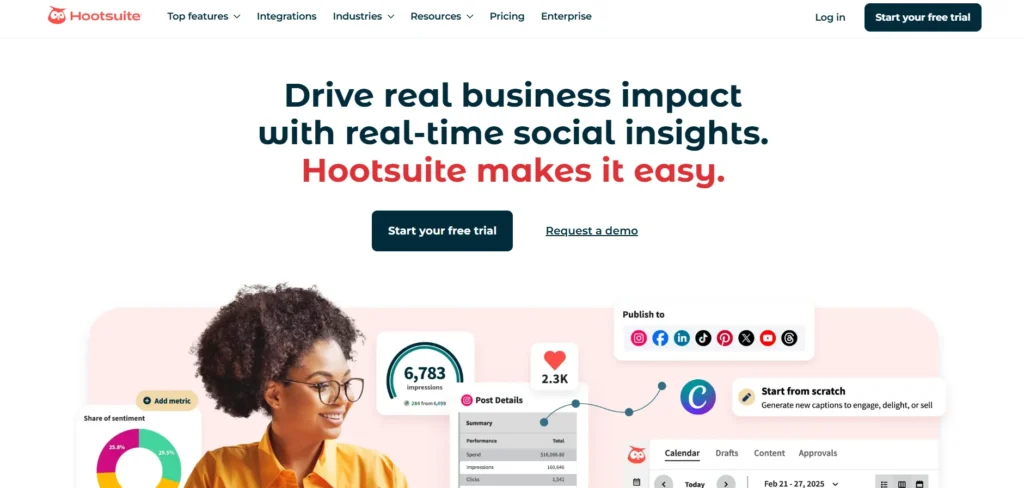
Hootsuite is a social media management and monitoring tool that is popular with businesses, agencies, and enterprises. It allows one to monitor mentions of a brand, keywords, hashtags, and discussions on numerous social networks in a single dashboard.
Hootsuite is also an all-in-one tool since it assists with scheduling, posting, and engagement, along with tracking. Its analytics and reporting elements assist in gauging campaign success, viewer counts, and activity patterns.
Hootsuite is the right choice with major platform integrations (Instagram, Twitter, [X], Facebook, LinkedIn, and YouTube) and the need to have organised working processes and collaboration with high-quality scale social listening.
Website: https://www.hootsuite.com
Key Features:
- Multi-platform social media monitoring and scheduling
- Real-time brand mention and keyword tracking
- Unified social inbox for engagement management
- Custom analytics dashboards and reporting
- Team collaboration and approval workflows
- Integrations with major social networks and apps
Pros:
- Supports multiple social networks in one dashboard
- Strong scheduling and monitoring capabilities
- Good analytics and reporting tools
- Ideal for teams and agencies
- Scalable for growing businesses
Cons:
- Pricing can be high for small users
- Analytics is limited on lower plans
- The interface may feel cluttered
Pricing:
- Standard– ₹2,600 per user/mo
- Advanced– ₹10,500 per user/mo
- Enterprise– Custom Pricing
2. Sprout Social
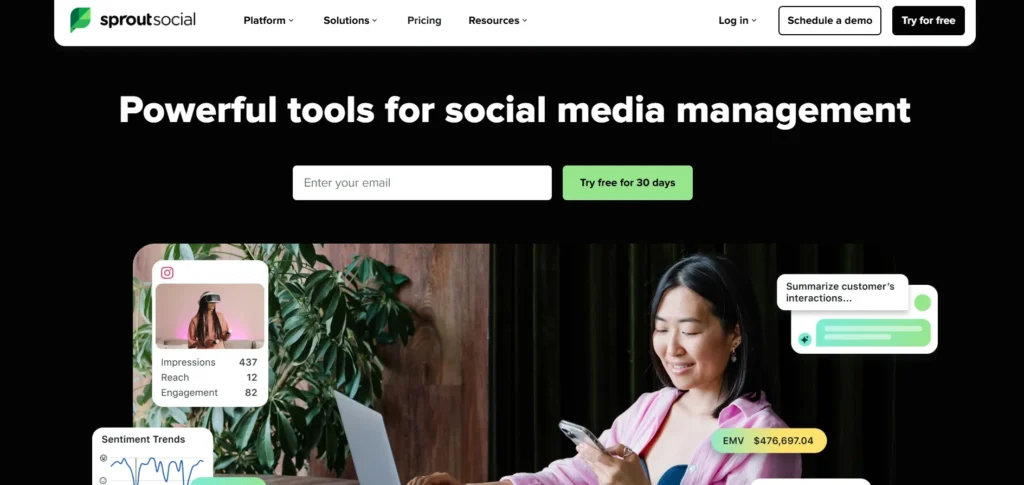
Sprout Social is a high- End social media monitoring and analytics software, which aims at providing deep audience insights and engagement intelligence. It enables the brands to trace conversation, brand mention, and sentiment and organise customer interactions effectively.
Sprout Social is distinguished by its intuitive design, robust reporting, and CRM-type functionality to monitor the interaction with followers. The tool is useful in data-driven marketing teams as it enables social listening, competitor analysis, and trend identification.
Sprout Social is best applicable to mid-size to large businesses that place importance on social strategy, data, and customer experiences with powerful analytics, teamwork tools, and customer relationship management.
Website: https://sproutsocial.com
Key Features:
- Advanced social listening and sentiment analysis
- Unified inbox for customer engagement
- Detailed analytics and performance reporting
- CRM-style audience profiles
- Competitor benchmarking tools
- Seamless integrations with social platforms
Pros:
- Excellent analytics and reporting depth
- Clean, intuitive user interface
- Strong customer support tools
- Ideal for data-driven teams
- Reliable enterprise-grade solution
Cons:
- Expensive pricing plans
- No free plan
- Overkill for solo users
Pricing:
- Standard– $199 per seat/month
- Professional– $299 per seat/month
- Advanced– $399 per seat/month
- Enterprise– Custom Pricing
3. Brandwatch
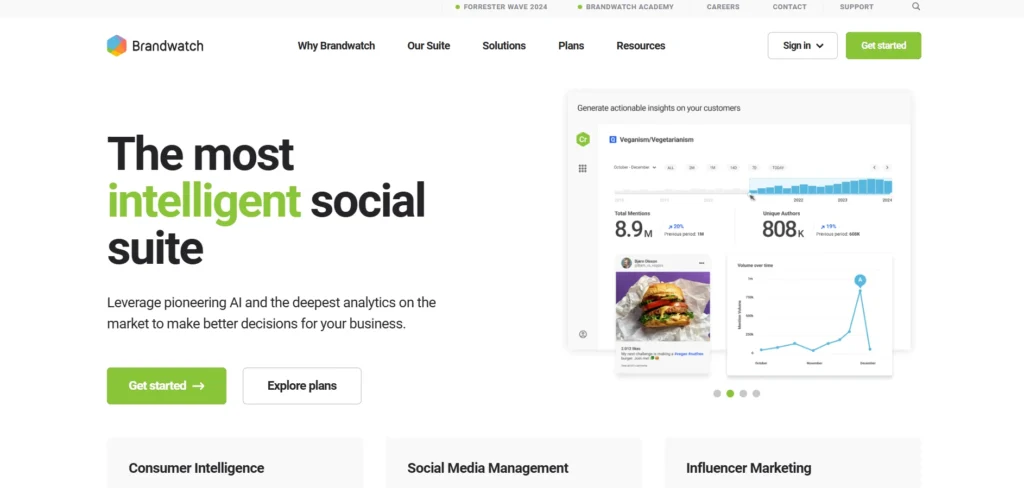
Brandwatch is a consumer intelligence and social media surveillance, enterprise-level platform and one of the leading social media monitoring tools, known for its sophisticated data analysis capabilities.
It processes huge volumes of information on social media, forums, blogs, and news publications to deliver real-time information on the actions of the audience, brand image, and market trends. Brandwatch provides powerful sentiment analysis, image recognition, and AI-based dashboards to provide in-depth reporting.
Big brands, agencies, and research teams commonly use it to manage their reputation and competitiveness. Brandwatch is suitable in organisations that need to conduct thorough social listening, make strategic decisions and handle extensive data information.
Website: https://www.brandwatch.com
Key Features:
- AI-powered social listening and consumer intelligence
- Global brand sentiment and trend analysis
- Image, video, and logo recognition
- Real-time alerts and crisis monitoring
- Custom dashboards and advanced analytics
- Enterprise integrations and APIs
Pros:
- Extremely powerful analytics engine
- Deep consumer and market insights
- Strong AI and data visualisation
- Suitable for global brands
- Highly customisable
Cons:
- Very expensive
- Steep learning curve
- Best suited for enterprises only
Pricing:
- Basic/Entry: ~$800-$2,000/month
- Professional/Mid-Tier: ~$2,000-$5,000+/month
- Enterprise: Custom pricing
Also Read: Competitor Analysis Tools
4. Brand24
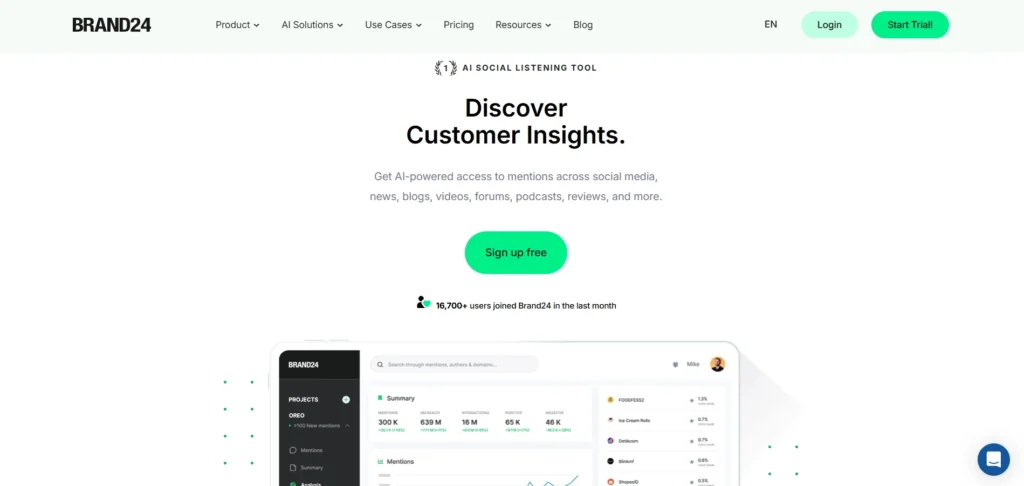
Brand24 is an easy to use social media tracking tool that helps to track real time brand mentions, key words and online discussions. It assists companies to be aware of what people are saying on social media, blogs, forums and on the news sites.
The tool also provides sentiment analysis, reach estimation, and identification of the people to influence, helping the brands to grasp audience perception. Brand24 also includes alerts and reports to react promptly to a negative mention or a trending discussion.
A user-friendly interface and low cost make it a very viable option in the case of small businesses, startups, and marketing teams who require an effective social listening with minimal complexity or cost.
Website: https://brand24.com
Key Features:
- Real-time brand mention monitoring
- Sentiment analysis and influence scoring
- Social and web monitoring
- Email and in-app alerts
- Shareable reports and dashboards
- Competitive comparison tools
Pros:
- Easy to use and set up
- Affordable compared to enterprise tools
- Accurate real-time alerts
- Good sentiment tracking
- Ideal for SMBs
Cons:
- Limited advanced analytics
- Fewer integrations
- Basic reporting visuals
Pricing:
- Monthly
- Individual– $199/month
- Team– $299/month
- Pro– $399/month
- Business– $599/month
- Enterprise– $999/month
- Annually
- Individual– $149/month
- Team– $249/month
- Pro– $299/month
- Business– $499/month
- Enterprise– From $999/month
5. Talkwalker
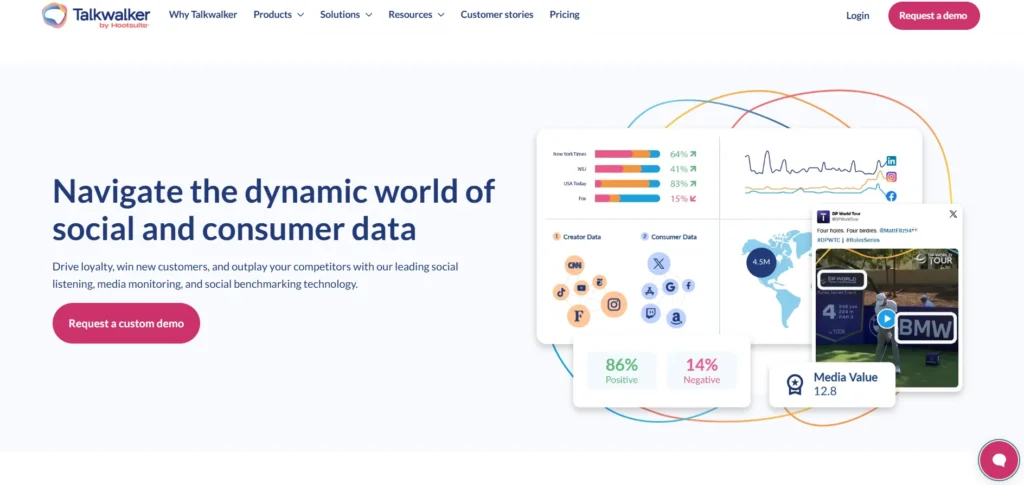
Talkwalker is an enterprise and global brand oriented social listening and media monitoring software. It monitors the discussions in the social media, in the news, blogs, forums, podcasts, and even in the printed media.
Talkwalker is an AI based analytics, image recognizer, and sentiment analyser that offers in-depth data on brand success and audience mood. The platform is best at trend identification, crisis tracking, and competitive tracking.
Talkwalker can be used by global brands with large amounts of data to manage with customisable dashboards and multilingual tracking. Its sophisticated analytics render it suitable to companies who want to gain strategic, reputation and real-time monitoring at a worldwide level.
Website: https://www.talkwalker.com
Key Features:
- AI-driven social listening and analytics
- Image and video recognition
- Global trend and sentiment tracking
- Crisis detection and alerts
- Custom dashboards and reports
- Enterprise-level integrations
Pros:
- Powerful AI and analytics
- Excellent global data coverage
- Strong visual listening features
- Ideal for large brands
- Reliable real-time monitoring
Cons:
- High pricing
- Complex setup
- Not beginner-friendly
Pricing:
- Talkwalker pricing isn’t fixed publicly, requiring custom quotes
6. Agorapulse
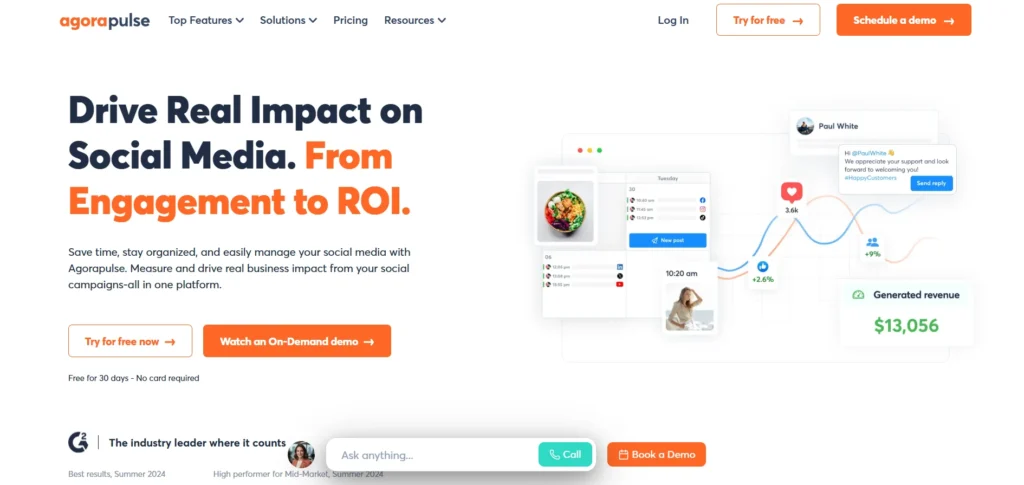
Agorapulse is a social network monitoring and management system and one of the leading social media monitoring tools that simplifies interaction and reporting for marketing departments. It allows users to track comments, mentions, and messages across multiple platforms in a single, unified inbox.
Social listening, competitor analysis, and hashtag monitoring are also available in Agorapulse to determine trends and audience mood. Its reporting solutions offer effective reporting on performance, engagement and ROI.
Agorapulse, famous with its simplicity and customer support, fits small to medium-sized businesses and agencies that require effective social monitoring, as well as, publishing, engagement, and analytics in a single system.
Website: https://www.agorapulse.com
Key Features:
- Social inbox and engagement monitoring
- Publishing and scheduling tools
- Social listening and keyword tracking
- Performance analytics and reports
- Team collaboration features
- CRM-style audience insights
Pros:
- Very intuitive interface
- Excellent engagement management
- Good value for money
- Strong customer support
- Ideal for agencies
Cons:
- Limited advanced listening
- Analytics not as deep as competitors
- Fewer integrations
Pricing:
- Monthly
- Standard– $99 per user/month
- Professional– $149 per user/month
- Advanced– $199 per user/month
- Custom Pricing
- Annually
- Standard– $79 per user/month
- Professional– $119 per user/month
- Advanced– $149 per user/month
- Custom Pricing
7. Mention
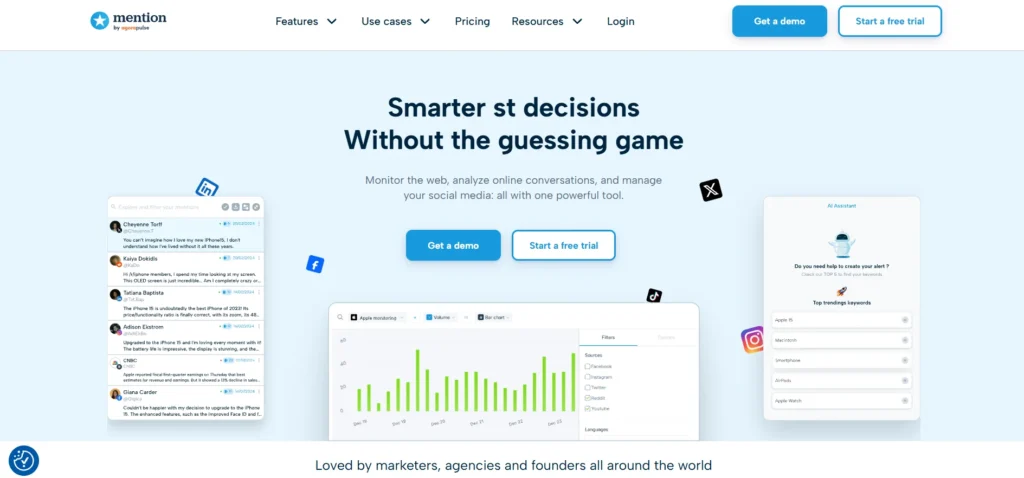
Mention is a social media monitoring software which is a real time tool that assists a brand in tracking the chats, brand mentions and keywords on the internet. It follows social sites, blogs, forums and news websites allowing one to swiftly reply to the audience.
The Mention has sentiment analysis, competitor tracking, and customisable alerts to ensure that users are aware of every relevant conversation. It has an intuitive dashboard that enables one to analyse trends and quantify brand visibility.
Mention is particularly helpful with startups, PR teams, and marketers who do not require complex monitoring and analytics. It is a collaborative and reporting tool and therefore is a feasible solution to online reputation and brand awareness management.
Website: https://mention.com
Key Features:
- Real-time brand and keyword monitoring
- Social media and web listening
- Sentiment analysis and alerts
- Competitive monitoring
- Shareable reports
- API and integrations
Pros:
- Easy to use
- Fast alerts and tracking
- Affordable pricing tiers
- Good for reputation management
- Clean dashboards
Cons:
- Limited historical data
- Reporting could be deeper
- Basic analytics
Pricing:
- Tailored to your organization’s specific monitoring needs and scale.
- Starting at– $599
8. Keyhole
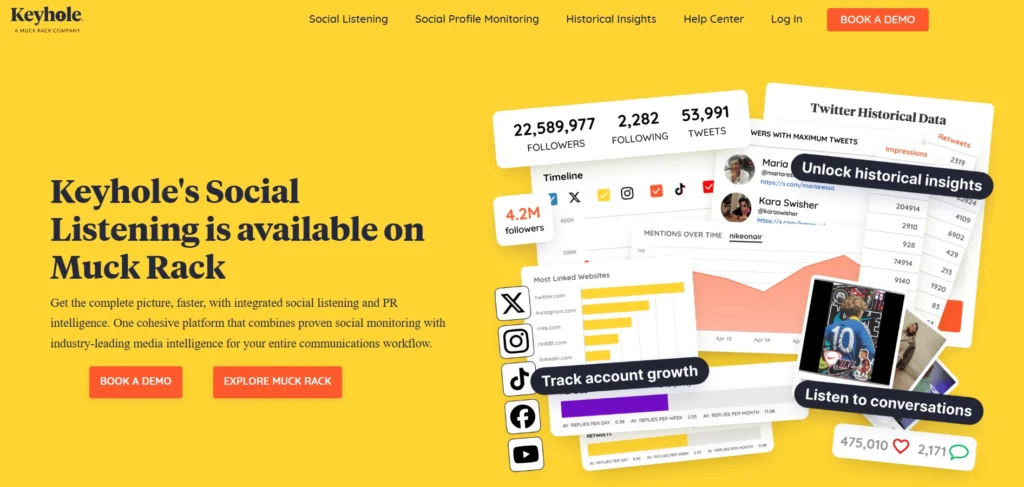
Keyhole is a social media analytics and monitoring tool that deals with hashtag tracking, monitoring a keyword and measuring a campaign performance.
It gives instant feedback on chats, interaction, and access on social media such as Instagram, Twitter (X), Facebook, and TikTok. Keyhole can also be used as an influencer marketing software to conduct influencer marketing and event-based campaigns, helping brands measure impact and ROI effectively. The platform provides audience demographics, sentiment analysis, and competitor benchmarking.
Keyhole can provide actionable data on hashtag performance and audience engagement trends and can be used by marketers, agencies, and brands with social campaigns that are running.
Website: https://keyhole.co
Key Features:
- Hashtag and keyword tracking
- Campaign performance analytics
- Influencer tracking tools
- Real-time social monitoring
- Visual dashboards and reports
- Competitive insights
Pros:
- Excellent hashtag tracking
- Simple and clear dashboards
- Useful for campaign analysis
- Good influencer metrics
- Easy to use
Cons:
- Limited platform coverage
- Not ideal for enterprises
- Pricing increases quickly
Pricing:
- Basic: Around $44/month
- Plus: Around $79/month
- Professional: Around $99/month
- Advanced Suite: Starting around CA$179/month
9. Meltwater
Meltwater is a social media monitoring and full media intelligence tool that is available to businesses and PR. It monitors brand references on social media, online news, blogs, and broadcast media, which provides a single perspective of media coverage.
Meltwater offers sentiment analysis, identification of influencers as well as competitive benchmarking to aid reputation management and strategic communications. Its superior analytics and reporting mechanisms assist in quantifying media impact and campaign results.
Meltwater suits best large organisations in need of social listening and conventional media monitoring. The international data coverage of the platform renders it appropriate to brands that are based in diverse markets.
Website: https://www.meltwater.com
Key Features:
- Media and social listening platform
- Brand sentiment and trend analysis
- PR and media monitoring
- Global data coverage
- Custom dashboards and reporting
- Enterprise integrations
Pros:
- Strong media intelligence tools
- Reliable global monitoring
- Advanced analytics
- Suitable for PR teams
- Scalable for enterprises
Cons:
- Expensive pricing
- Complex interface
- Requires onboarding
Pricing:
- Meltwater pricing is customised and quote-based
10. Circleboom
Circleboom represents a social media management and social media monitoring tools platform, with its primary emphasis on Twitter (X) and Instagram analytics. It helps users monitor mentions, followers, engagement trends, and audience behavior effectively.
Circleboom is also equipped with the means of cleaning up dormant followers, scheduling posts, and competitor account analyses. Its tracking capability helps the brands to know what the audience is interested in and where they can develop. The platform is convenient and fits people, influencers, and small businesses who want to maximise their social presence.
Circleboom will enable better engagement strategies by providing detailed analytics and insights about the audience without overwhelming users with a variety of complicated data.
Website: https://circleboom.com
Key Features:
- Twitter and Instagram monitoring
- Audience analytics and insights
- Content scheduling and publishing
- Follower growth analysis
- Spam and fake account detection
- Simple reporting tools
Pros:
- Easy to use
- Affordable plans
- Strong Twitter analytics
- Clean interface
- Good for individual creators
Cons:
- Limited platform support
- Basic monitoring features
- Not enterprise-ready
Pricing:
- Pro– $23.99/month for Up to 25,000 Followers
- Plus– $29.99/month for Up to 100,000 Followers
- Premium– $35.24/month for Up to 300,000 Followers
- Elite– $99.99/month for Up to 3,000,000 Followers
11. Statusbrew
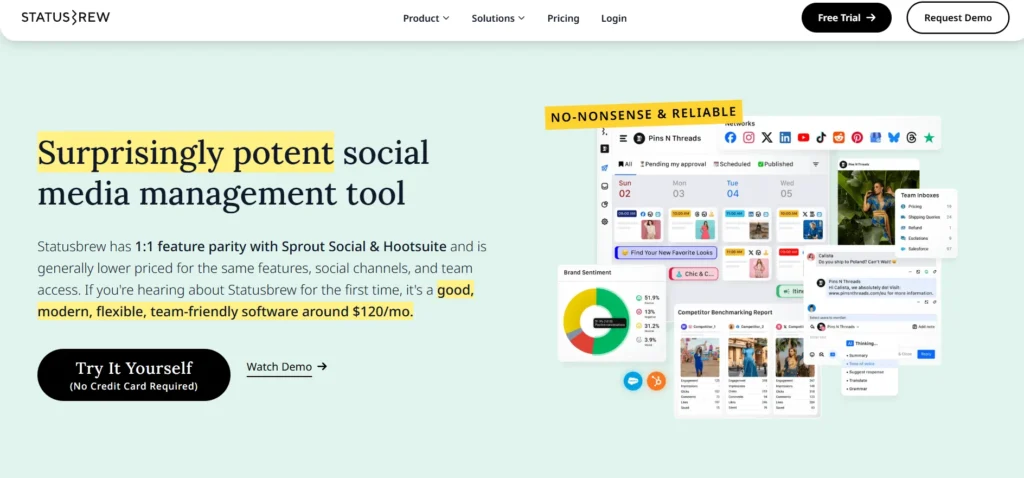
Statusbrew is a social media monitoring and analytics software that aims to assist the brand to monitor conversation, audience sentiment, and engagement trends. It allows users to track keywords and mentions and hashtags on social sites and get information on content performance.
Statusbrew is devoted to the simplification of social data in order to facilitate more effective decision-making and campaign optimization. Its reporting capabilities are used to quantify reach, engagement, and audience growth over time.
Statusbrew can be used by marketers and small teams that require an easy monitoring tool that is not as complex as an enterprise one. The platform facilitates data-driven strategies as it transforms social discussions into actionable insights.
Website: https://statusbrew.com/
Key Features:
- Basic social data monitoring
- Content performance insights
- Brand mention tracking
- Simple analytics dashboards
- Lightweight reporting tools
- Easy setup
Pros:
- Simple and lightweight
- Beginner-friendly
- Low learning curve
- Affordable pricing
- Clean UI
Cons:
- Limited advanced analytics
- Few integrations
- Basic reporting
Pricing:
- Monthly
- Lite– $89.00/mo
- Standard– $179.00/mo
- Premium– $299.00/mo
- Enterprise– Custom Pricing
- Annually
- Lite– $69.00/mo
- Standard– $129.00/mo
- Premium– $229.00/mo
- Enterprise– Custom Pricing
12. ContentStudio
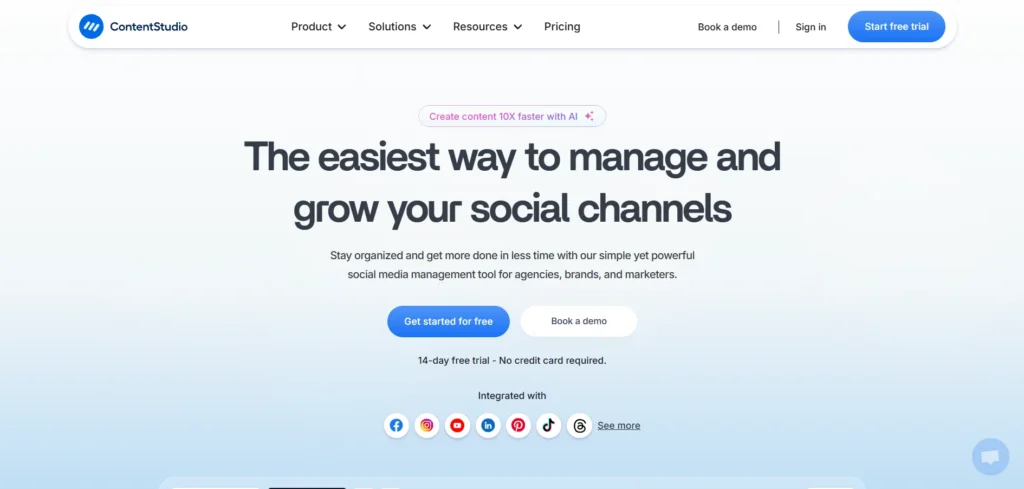
ContentStudio is a content marketing and social media monitoring software that integrates publishing, analytics and listening features. It enables them to monitor brand mentions, trending topics and competitor content in social networks and blogs.
Another tool that can be used by marketers with several channels is ContentStudio, which also facilitates content discovery, scheduling, and performance tracking. Its analytics enables it to gauge the engagement, growth of the audience and the effectiveness of the campaigns.
ContentStudio can be used by marketing teams and agencies with collaboration tools and workflow management. The platform aids in combining content strategy and real-time social insights to achieve the relevance and engagement of communication.
Website: https://contentstudio.io
Key Features:
- Social listening and content discovery
- Multi-platform publishing
- Keyword and trend tracking
- Analytics and reporting tools
- Team collaboration features
- Automation workflows
Pros:
- Strong content discovery
- Easy scheduling tools
- Good value for money
- User-friendly UI
- Ideal for content teams
Cons:
- Listening features not very deep
- Limited sentiment analysis
- Interface can feel busy
Pricing:
- Monthly
- Standard– $29/month
- Advanced– $69/month
- Agency Unlimited– $139/month
- Annually
- Standard– $19/month
- Advanced– $49/month
- Agency Unlimited– $99/month
13. Iconosquare
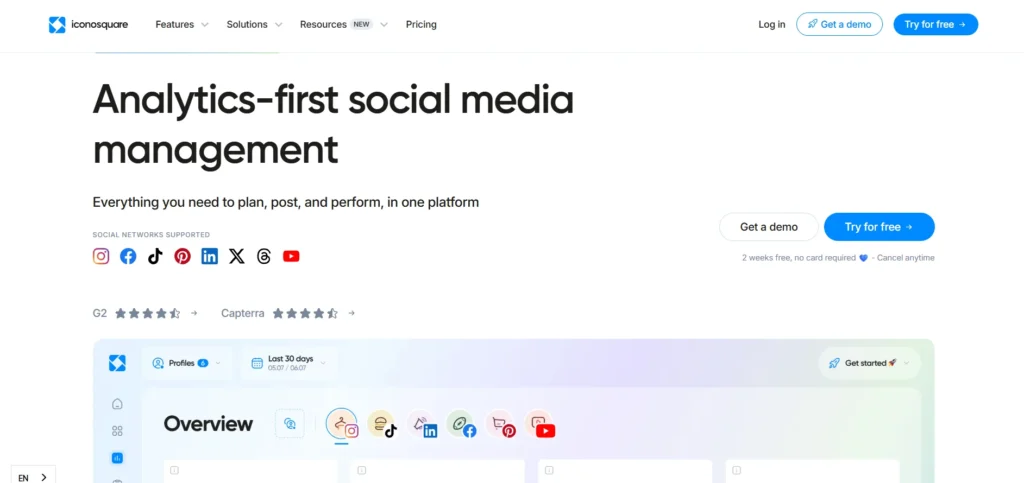
The products of interest are Instagram, Facebook, LinkedIn, and TikTok, in which case Iconosquare is a social media analytics and monitoring application and one of the widely used social media monitoring tools. It provides detailed reports on engagement, reach, follower growth, and overall content performance.
Another tool available on the Internet, which allows tracking comments, mentions, and activity of competitors, is Iconosquare. It is easy and efficient in tracking its performance with its interactive dashboards and configurable reports. Brands, agencies, and social media managers who value data-driven decision-making are popular on the platform.
Monitoring and analytics services of Iconosquare are valuable to maximise posting, enhance engagement, and comprehend audience behavior on visual-driven social platforms.
Website: https://www.iconosquare.com
Key Features:
- Instagram, TikTok, and Facebook analytics
- Engagement and follower tracking
- Comment and mention monitoring
- Custom reports and exports
- Competitor benchmarking
- Content performance insights
Pros:
- Excellent visual analytics
- Clean and intuitive dashboards
- Strong Instagram focus
- Reliable reporting
- Great for creators
Cons:
- Limited listening features
- Fewer platforms supported
- No free plan
Pricing:
- Launch– $39/month
- Scale– $83/month
- Excel– $139/month
14. Awario
Awario is a robust social listening and search engine, which is used to keep track of brand mentions, keywords, and conversations in real-time.
It follows social media, blogs, forums, and news websites to give information on brand perception and sentiment of the audience. Awario provides sentiment analysis, influencer identification, and competitive monitoring services. Its alerts assist businesses to react in a fast manner to negative feedback or emerging trends.
Awario fits startups, marketers and small businesses that want affordable, but high performance social monitoring. The platform enables the conversion of online discussions into active marketing and reputation management strategies due to its detailed analytics and exportable report.
Website: https://awario.com
Key Features:
- Real-time social listening
- Brand and keyword monitoring
- Sentiment analysis
- Influencer identification
- White-label reports
- Competitive tracking
Pros:
- Affordable pricing
- Accurate real-time monitoring
- Easy setup
- Good influencer insights
- Suitable for SMBs
Cons:
- Interface feels dated
- Limited visual analytics
- Fewer integrations
Pricing:
- Starter– $49/mo
- Pro– $149/mo
- Enterprise– $399/mo
15. YouScan
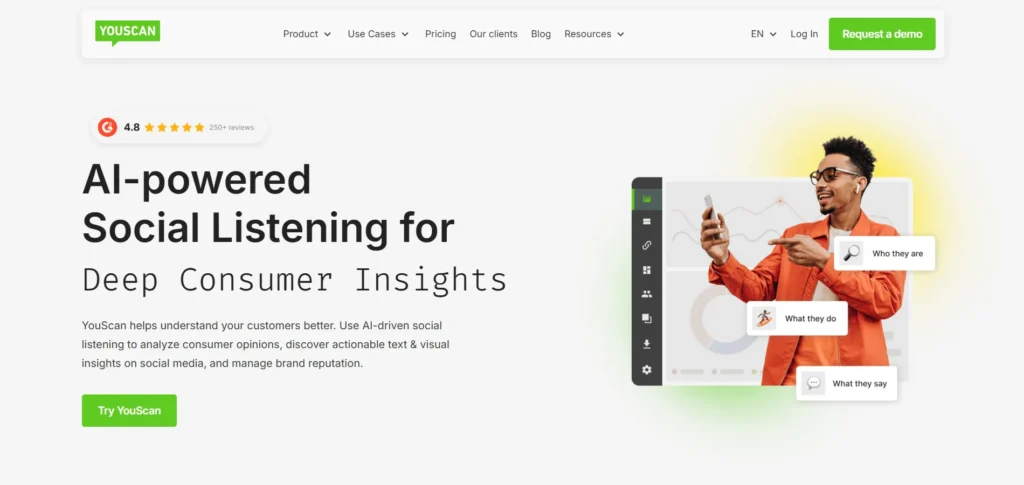
YouScan is a social media listening tool which focuses on AI-powered analytics and visual content recognition. It trolls through social media and the web to track conversations, pictures, and videos to gather audience insights to go beyond the text-based referrals.
Sentimental analysis, logo recognition, and emotion-tracking offered by YouScan offer in-depth insights into the brand perception. Enterprises and agencies are popular consumers of the platform in the context of consumer research, trend analysis, and reputation management.
Having the ability to create personalised dashboards and get alerts in real time, YouScan will be suitable to those brands that depend on visual content and require advanced tools to process intricate social media data.
Website: https://youscan.io
Key Features:
- AI-powered social listening platform
- Visual image and logo recognition
- Advanced sentiment and emotion analysis
- Trend detection and insights
- Custom dashboards and alerts
- Enterprise integrations
Pros:
- Powerful AI and visual listening
- Deep sentiment analysis
- Excellent data accuracy
- Ideal for global brands
- Advanced analytics
Cons:
- High pricing
- Complex platform
- Not suitable for beginners
Pricing:
- STARTER 3– Ideal for SMBs and Startups- $499 per month
- Unlimited plans– Best for Brands and Agencies- Configured to your requirements
Ending Thoughts
Choosing the right social media monitoring software can significantly improve how brands listen, analyse, and respond to online conversations. The top 15 social media monitoring tools offer diverse capabilities, ranging from real-time mention tracking and sentiment analysis to competitor benchmarking and detailed performance analytics. Each tool caters to different business needs, whether for small businesses seeking simplicity or enterprises requiring advanced reporting and integrations.
By leveraging these platforms, organisations can strengthen customer relationships, protect brand reputation, and optimise marketing strategies with actionable insights. Evaluating features, ease of use, scalability, and pricing ensures the selected tool delivers measurable value. Ultimately, effective social media monitoring empowers brands to stay informed, agile, and competitive in an ever-evolving digital ecosystem.
FAQs
Why are Social Media Monitoring Software Important for Businesses?
They help brands manage reputation, identify customer issues early, analyse trends, and improve marketing and customer support strategies.
Which Social Media Platforms can these Tools Monitor?
Most tools monitor platforms like Facebook, Instagram, X (Twitter), LinkedIn, YouTube, TikTok, forums, blogs, and news websites.
Are Social Media Monitoring Tools Suitable for Small Businesses?
Yes, many tools offer affordable plans and simple dashboards designed specifically for startups and small businesses.
Do these Tools Provide Real-time Alerts?
Most advanced tools offer real-time notifications for brand mentions, negative comments, or trending topics.
Can Social Media Monitoring Software Analyse Sentiment?
Yes, many tools use AI-powered sentiment analysis to classify mentions as positive, negative, or neutral.
