
Managing employee compensation in Saudi Arabia has become increasingly complex due to strict labor regulations, evolving compliance standards, and the growing need for digital transformation in HR operations. Businesses today are expected to maintain accurate salary records, ensure timely payments, and comply with the Wage Protection System (WPS), which monitors and regulates salary transfers across the country.
In this environment, relying on manual processes or outdated spreadsheets can lead to costly errors, compliance risks, and inefficiencies. This is where automation plays a crucial role in modern workforce management. Advanced digital tools help organizations streamline salary calculations, manage deductions and allowances, track attendance, and generate compliant payroll reports with minimal effort. They also improve transparency between employers and employees, reducing disputes and building trust within the workplace.
Additionally, these systems are designed to align with Saudi Arabia’s labor laws, making it easier for businesses to handle end-of-service benefits, leave encashments, and GOSI contributions accurately. As companies expand and hire more employees, scalability and accuracy become even more important.
Overall, adopting Payroll Software in Saudi Arabia is no longer just an operational upgrade—it is a strategic necessity for businesses aiming to improve efficiency, maintain compliance, and ensure smooth financial operations in a highly regulated market.
What Is Payroll Software and Why Does Saudi Arabia Need It?
Payroll software is a specialized digital platform that automates the end-to-end process of calculating and distributing employee salaries, tax deductions, and benefits. Instead of relying on error-prone spreadsheets, these platforms automatically factor in hourly wages, overtime, bonuses, and standard deductions to generate accurate payouts. In a modern corporate environment, a dedicated payroll system acts as the central hub connecting human resources, corporate accounting, and local banking networks.
Payroll software is also evolving with smarter reporting tools, where Analytics for Human Capital Management helps businesses understand workforce patterns and improve decision-making.
For businesses operating in Saudi Arabia, this software is a regulatory necessity rather than a luxury. The Kingdom’s strict compliance framework demands real-time tracking through government portals like Mudad, Qiwa, and Muqeem. Without automated systems, accurately calculating the 11.75% employer GOSI (General Organization for Social Insurance) contribution, managing complex localized End-of-Service Benefits (EOSB), and generating the exact financial SIF files required by the Wage Protection System (WPS) becomes a logistical nightmare that risks heavy regulatory penalties.
Saudi Arabia Payroll Compliance Requirements in 2026
Navigating the shifting regulatory landscape of the Kingdom requires a deep, technical understanding of localized labor laws. Before integrating any payroll platform, your business must be fully aligned with the core pillars of Saudi compliance that dictate how modern workforces operate in 2026.
The following mandatory frameworks must be native to your chosen software to avoid immediate financial and operational friction.
GOSI (General Organization for Social Insurance)
The General Organization for Social Insurance regulates mandatory social security contributions for all employees working within Saudi Arabia. For Saudi nationals, payroll systems must precisely calculate and deduct a total contribution rate of 21.75% based on the employee’s basic salary plus housing allowance. This is split between an 11.75% employer contribution and a 10% employee deduction, funding retirement, disability, and unemployment insurance (SANED).
For expatriate workers, employers must contribute a lower rate of 2% to cover occupational hazards and workplace injuries. Because these rates are subject to strict caps and regulatory adjustments, payroll software must automatically recalculate monthly contributions to prevent legal exposure and ensure accurate monthly reporting via the official GOSI portal.
WPS and Mudad – What is the Difference?
While the Wage Protection System and the Mudad platform work hand-in-hand to guarantee fair compensation, they serve distinctly different roles in the compliance lifecycle. The WPS is a regulatory framework mandated by the Ministry of Human Resources and Social Development (MHRSD) that forces employers to pay salaries through local banks using a strictly structured Standard Information File (SIF). Mudad, on the other hand, is the actual digital platform and clearinghouse created by the government to enforce the WPS.
Businesses upload their monthly SIF files directly to Mudad, which cross-references the transferred amounts against registered employment contracts, flags any salary delays or unauthorized deductions, and handles the electronic settlement of payroll discrepancies.
Nitaqat and Saudization (Nitaqat Color Bands)
The Nitaqat program is the national localized employment framework designed to increase the ratio of Saudi nationals working in the private sector. It categorizes businesses into distinct color-coded bands—Platinum, Green (High, Medium, Low), and Red based on their economic activity, company size, and specific Saudization percentages.
A company’s color band directly impacts its operational freedom; businesses in the Platinum and High Green bands enjoy fast-tracked visa allocations and smooth labor transfers, while companies falling into the Red band are penalized with frozen work permit renewals and blocked access to the Qiwa platform. Modern payroll platforms integrate with HR records to track these ratios in real-time, warning management before a shift in headcount accidentally drops the business into a lower compliance band.
End-of-Service Gratuity (EOSB) Calculation Rules
Calculating the End-of-Service Benefit is one of the most critical legal obligations under Saudi Labor Law, and it demands precise historical salary tracking. For standard employment contracts, workers are entitled to an amount equal to 15 days of their current wage for each of the first five years of service, escalating to a full month’s wage for every year thereafter.
However,the final payout alters dramatically if an employee resigns rather than being terminated. If an worker resigns after serving between two and five years, they receive only one-third of the calculated gratuity; this increases to two-thirds for five to ten years of service, and the full amount is unlocked only after completing a decade of employment. Payroll systems must maintain a continuous running ledger of these accruals to ensure corporate balance sheets reflect true future financial liabilities.
Penalties for Non-Compliance
The Saudi government enforces labor compliance with a strict, digitized penalty system that hits non-compliant organizations with immediate financial and operational restrictions. Failing to submit WPS files through Mudad on time or underpaying registered salaries can result in corporate bank accounts being frozen, suspension of foreign recruitment visas, and fines starting at SAR 10,000 per affected employee.
Furthermore, missing GOSI settlement deadlines triggers a compounding penalty of 2% per month on the unpaid balance. Because all regulatory platforms are fully integrated, an unresolved violation in one department instantly cascades, halting a company’s ability to issue exit-reentry visas or transfer employee sponsorships via Qiwa until all outstanding penalties are cleared.
Top Payroll Software in Saudi Arabia – Comparison Table
| Software Name | Target Audience / Company Size | Primary Strength / Standout Attribute | Best For |
| 1. Zimyo | Growing SMEs & Mid-Market | Fast, highly modular, scalable cloud setup | Fast-growing teams wanting core payroll with modular add-ons |
| 2. ZenHR | Mid-Sized to Large Enterprises | All-in-one regional HRIS with flawless Hijri/Gregorian handling | Operations requiring robust shift management and deep local HR workflows |
| 3. PalmHR | Tech-Forward Startups & Enterprises | Direct, automated Saudi government API integrations | Teams prioritizing direct portal connections (Qiwa/Mudad) and clean UI |
| 4. Bayzat | Progressive & Corporate Teams | Blends payroll processing with employee health and financial wellness | Companies looking to leverage health insurance and premium employee perks |
| 5. factoHR | Large Corporations & Conglomerates | Granular formula-driven engines and biometric syncing | Mass workforces (manufacturing/retail) with hyper-complex allowance structures |
| 6. Jisr | Local KSA Businesses & Large Teams | Native, Riyadh-localized ecosystem with domestic data hosting | Organizations prioritizing deep homegrown compliance and local support |
| 7. Ojoor | Retail, Hospitality & Service SMEs | Rules-driven variable shift and dynamic overtime calculation | Dynamic workforces dealing with frequent monthly roster adjustments |
| 8. GulfHR | Established Corporate Groups | Exceptional legacy configuration flexibility for multi-entity tiers | Large traditional firms needing a stable, time-tested payroll matrix |
| 9. Qoyod | Saudi Startups & Micro-SMBs | Direct union of bookkeeping ledger and payroll in one suite | Small shops and micro-teams wanting budget-friendly financial tracking |
| 10. Mercans | Multinational & Cross-Border Firms | High-security, multi-country gross-to-net global SaaS engine | Global enterprises requiring elite audit logs and multi-currency scaling |
List of Top 10 Payroll Software in Saudi Arabia
1. Zimyo
Website: www.zimyo.com
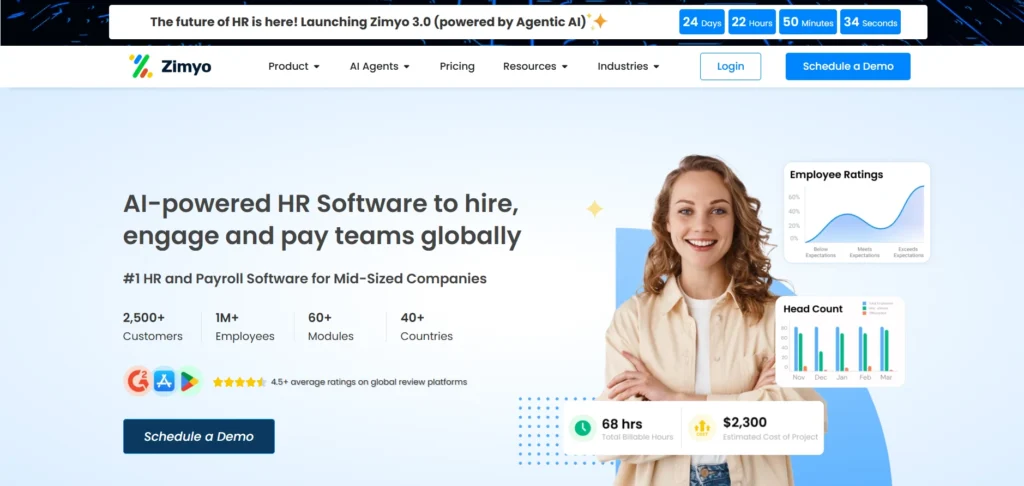
Zimyo is a robust, cloud-based HR and payroll platform specifically optimized for organizations looking to scale across Saudi Arabia and the broader GCC region. As a leading Payroll Software in Saudi Arabia, the platform minimizes administrative bottlenecks by enabling human resource managers to execute complete, localized payroll runs in just a few clicks. Its clean, intuitive interface successfully removes human calculation errors from monthly adjustments, salary advances, and multi-currency payouts. Highly favored for its modularity, Zimyo allows growing Saudi businesses to deploy core payroll first and seamlessly attach recruitment, performance tracking, and expense management modules as their localized team grows.
Key Features:
- Automated multi-currency salary processing built specifically for regional distribution.
- Bilingual localized Employee Self-Service (ESS) app for quick profile management.
- Dynamic overtime and variable allowance calculators mapped to custom employment categories.
- Advanced loans and salary advance ledger tracking directly tied to monthly deductions.
GOSI and WPS/Mudad Compliance
Zimyo manages Saudi compliance by generating fully validated, bank-ready Standard Information Files (SIF) matching exact regulatory specifications. The engine features native calculation rules for GOSI contributions, instantly splitting the mandatory 11.75% employer share and 10% Saudi national deduction based on updated base wages plus housing allowances. It acts as an accurate compliance gateway, preparing clear data structures ready for direct upload into the Mudad Compliance System.
Pros:
- Impeccable, rapid customer support tailored to regional working hours and local business practices.
- Highly flexible salary structure configuration that adapts to complex corporate allowance policies.
Cons:
- Fewer out-of-the-box native integrations with niche, legacy localized accounting tools.
- The overwhelming depth of reporting metrics requires a slight learning curve for fresh HR personnel.
Pricing:
| Basic | Standard | Enterprise |
| $0.84/user.month | $1.26/user/month | $1.68/user/month |
Best For:
Growing small-to-medium enterprises (SMEs) and mid-market organizations in Saudi Arabia seeking a fast, modern, and highly scalable cloud payroll solution.
2. ZenHR
Website: www.zenhr.com
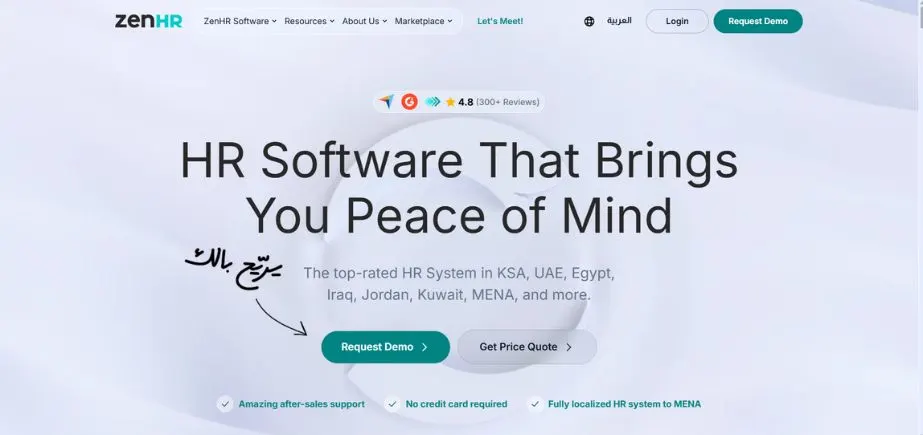
ZenHR is a premier, localized Human Resources Information System (HRIS) built from the ground up to address the unique labor landscape of the Middle East, with a heavily specialized ecosystem for Saudi Arabia. It completely eliminates manual calculations by digitizing the entire employee lifecycle from onboarding to final settlement. The platform operates natively in both English and Arabic, ensuring right-to-left layout compliance across all administrative dashboards and employee-facing tools. By seamlessly blending localized payroll rules with advanced time tracking, ZenHR provides corporate leadership with unmatched structural transparency and foolproof labor policy enforcement.
Key Features:
- Fully bilingual interface featuring comprehensive Right-to-Left (RTL) structural alignment.
- Automated End-of-Service Benefit (EOSB) provision calculators updating balance sheets in real-time.
- Advanced automated time and attendance tracking with direct geofencing capabilities.
- Dynamic shift management module with automatic night-shift and holiday overtime calculations.
GOSI and WPS/Mudad Compliance
ZenHR houses an exceptionally robust Saudi compliance matrix that calculates precise GOSI social security deductions while handling specific expatriate occupational hazard fees automatically. The system provides seamless synchronization with the Mudad platform by tracking salary compliance scores and catching individual wage deviations before exporting the monthly SIF file. This proactive auditing ensures that the generated payroll data matches the registered MHRSD digital contracts perfectly.
Pros:
- Exceptional localization handling the complex interaction between Hijri and Gregorian calendars flawlessly.
- A comprehensive, all-in-one HR suite that avoids the need for third-party software stacking.
Cons:
- Implementation and data migration from legacy environments can be time-consuming for large workforces.
- Enterprise tier features might feel feature-heavy and complex for businesses with fewer than twenty employees.
Pricing:
Custom pricing. Plans are tailored specifically to company size and operational scope following a direct consult and product demonstration.
Best For:
Mid-sized to large enterprises across Saudi Arabia requiring a deeply localized, all-encompassing HR and payroll ecosystem that masters complex shifts and scheduling.
3. Ojoor
Website: www.ojoor.com
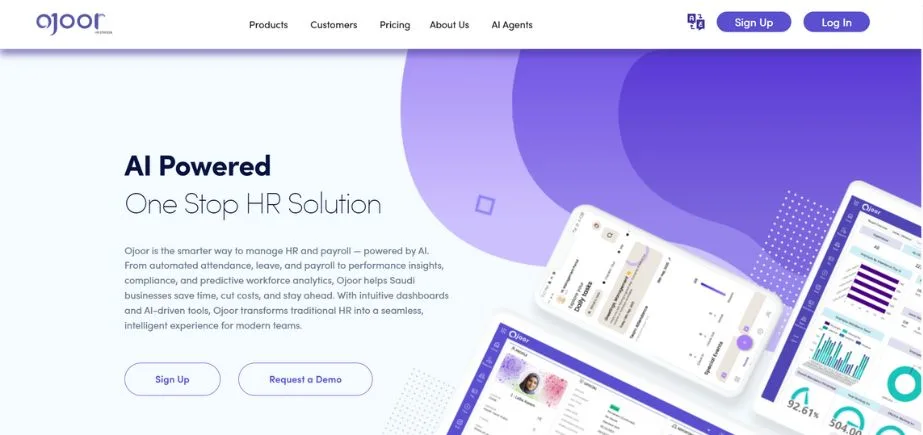
Ojoor is a highly specialized payroll and performance-focused HR solution created specifically to tackle the strict compliance demands of Saudi Arabia and the GCC. It focuses heavily on removing the friction out of daily attendance tracking and variable workforce compensation. The platform uses an advanced, rules-based engine that automatically translates complex shift patterns, multi-site check-ins, and late penalties into accurate payroll calculations. This makes Ojoor an excellent option for businesses dealing with highly dynamic workforces where compensation changes frequently from month to month.
Key Features:
- Intelligent, rules-driven shift and overtime computation engine for dynamic workforces.
- Comprehensive employee ledger tracking loans, advance salary payments, and monthly repayments.
- Intuitive Employee Self-Service (ESS) app for instant submission of expense receipts and leave requests.
- Advanced automated calculations for final payments and End-of-Service Benefits (EOSB).
GOSI and WPS/Mudad Compliance
Ojoor handles Saudi statutory requirements through an integrated automated compliance center. The platform performs real-time data audits on your payroll runs, instantly creating bank-compliant Standard Information Files (SIF) optimized for the Mudad system. It ensures GOSI contribution deductions adjust instantly whenever base pay or housing allowances change, preventing regulatory mismatches before data submission.
Pros:
- Excellent handling of variable shift configurations, overtime rules, and late-docking policies.
- Straightforward, clutter-free user interface that streamlines monthly payroll approvals.
Cons:
- Native out-of-the-box connections with global third-party ERP platforms are somewhat limited.
- The onboarding phase can require significant manual input if migrating messy historical records.
Pricing:
Available upon request following a direct discovery call and tailored software demonstration.
Best For:
Companies in the retail, hospitality, and service industries that manage complex employee shifts alongside strict Saudi compliance needs.
4. Bayzat
Website: www.bayzat.com
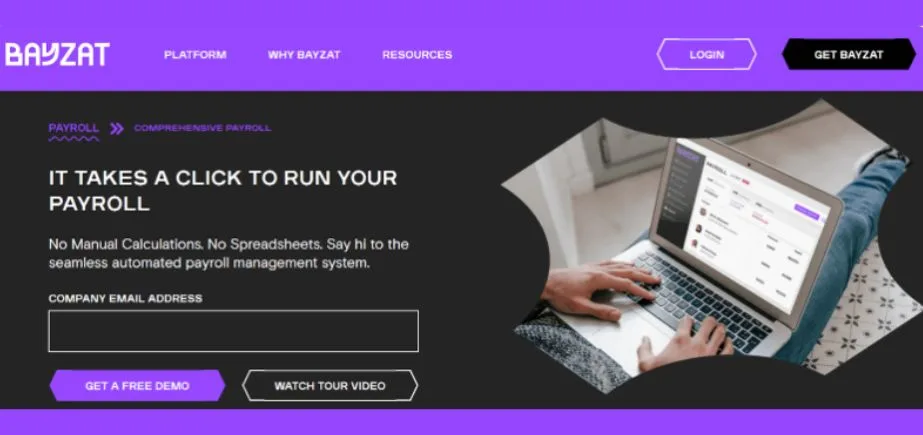
Bayzat is a highly dominant player in the GCC fintech and HR tech space, delivering an exceptional cloud solution that unifies payroll processing, corporate team insurance, and employee wellness benefits. As a trusted Payroll Software in Saudi Arabia, Bayzat is engineered to maximize overall workforce productivity, transforming payroll from a routine financial transaction into a comprehensive employee motivation touchpoint. The platform provides a unique, highly localized employee experience by offering advanced financial wellness tools directly within the payroll interface, including automated early salary access options that adhere safely to Saudi corporate guidelines and liquidity structures.
Key Features:
- Integrated corporate health insurance tracking tied directly to active employee payroll profiles.
- Innovative employee financial wellness features, including regulated salary advance tools.
- Robust expense management engine featuring automated receipt scanning and instant approval routing.
- Centralized employee database with powerful, data-driven workforce demographic analytics.
GOSI and WPS/Mudad Compliance
Bayzat handles localized compliance through a dedicated regional computation module that dynamically adjusts to Saudi labor laws. The platform compiles complex salary adjustments, leaves, and overtime variables into a perfectly formatted SIF file designed for error-free clearing through the Mudad compliance gateway. GOSI contributions are locked directly to base salary modifications, ensuring corporate insurance ledgers remain perfectly balanced against state records each month.
Pros:
- Unrivaled holistic focus on employee perks, wellness tracking, and medical insurance alignment.
- Beautifully designed mobile application that drives high daily employee engagement rates.
Cons:
- The insurance and wellness modules are heavily optimized for urban centers, offering less value to remote industrial operations.
- Configuring complex, multi-tiered localized labor allowance structures can sometimes require custom engineering support.
Pricing:
Custom enterprise pricing models scale dynamically based on total employee headcount and active wellness modules.
Best For:
Progressive companies and corporate teams looking to blend mandatory Saudi payroll processing with premium employee benefits, medical tracking, and modern retention tools.
5.factoHR
Website: www.factohr.com
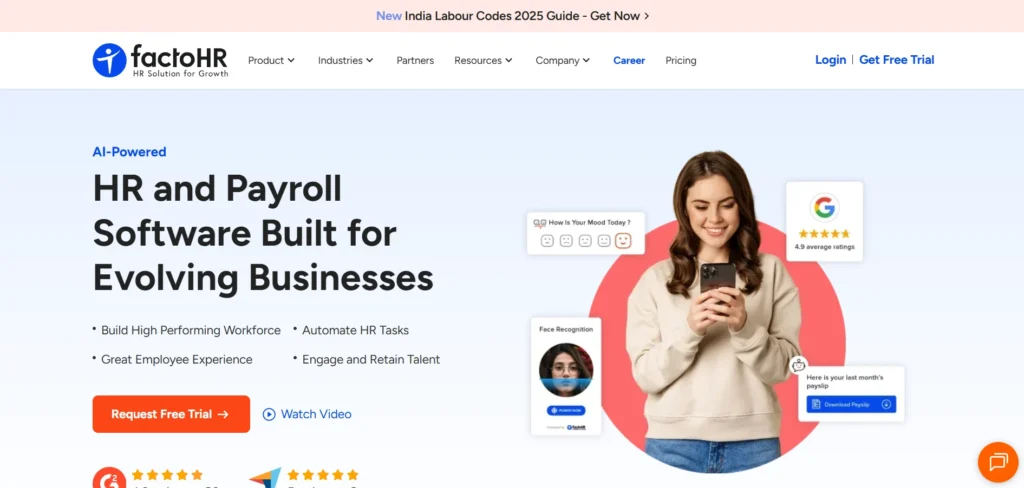
factoHR is an elite, highly adaptive cloud-based HRMS and payroll automation powerhouse designed to handle massive workforce numbers and intricate, data-heavy operating environments. It is engineered specifically to eliminate data silos in large-scale operations like manufacturing plants, retail chains, and construction groups in Saudi Arabia. The platform provides extreme calculation depth, utilizing powerful formula-driven engines that allow companies to build highly intricate compensation packages, multi-layered allowance criteria, and complex performance bonus schemes while strictly upholding Saudi statutory boundaries.
Key Features:
- Extremely granular formula-driven salary calculation engine built for hyper-complex compensation designs.
- Enterprise-grade biometric device integration supporting multi-site industrial attendance tracking.
- Comprehensive, fully automated End-of-Service Benefit (EOSB) evaluation including legal contract variation tracking.
- Advanced performance management integration linking hard KPI scores directly with monthly variable payroll payouts.
GOSI and WPS/Mudad Compliance
factoHR processes Saudi statutory requirements through a high-performance compliance core that runs automated verification checks on all salary data before finalizing transactions. The software accurately calculates complex GOSI allocations for domestic workers and handles regional variations without error. It tracks formatting compliance meticulously, producing flawless WPS SIF files that match SAMA bank standards, significantly reducing payment rejections on the Mudad platform.
Pros:
- Unmatched configuration depth capable of automating highly challenging, non-standard corporate allowance systems.
- Robust scalability that easily processes thousands of complex employee transfers and calculations without lagging.
Cons:
- The platform’s vast array of advanced settings can feel intimidating and overly complex for small HR offices.
- The system setup phase requires a dedicated, structured timeline to fully map detailed enterprise policies.
Pricing:
| Free | Core | Premium | Ultimate |
| $0 | $52.44/mo | $62.93/mo | $73.42/mo |
Best For:
Large corporations, manufacturing operations, and massive conglomerates in Saudi Arabia require maximum structural customization and powerful biometric-linked calculation engines.
6. Jisr
Website: www.jisr.net
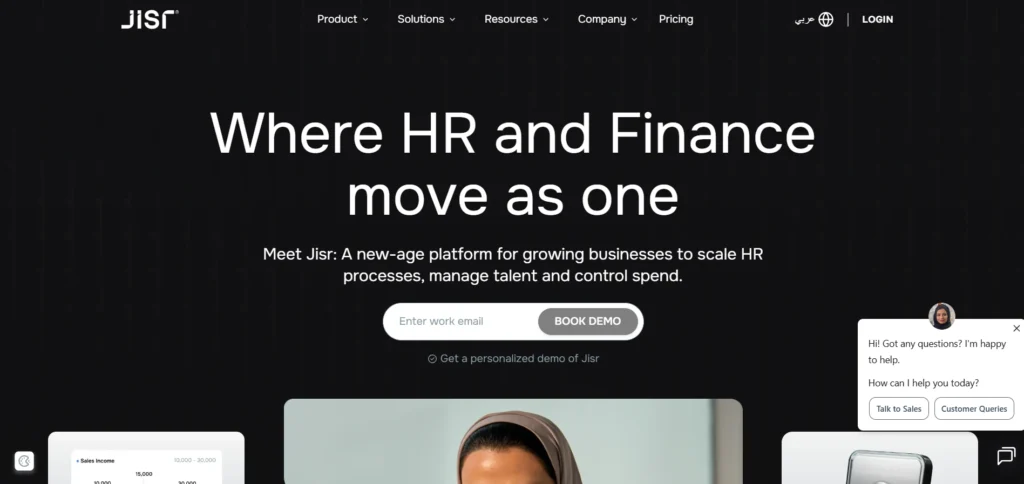
Jisr is widely recognized as the premier homegrown HR and payroll platform built specifically for the Saudi Arabian business ecosystem. Headquartered in Riyadh, it is designed from the ground up to handle the unique cultural and regulatory demands of local organizations. The system eliminates manual data entries by completely automating local salary structures, housing distributions, and complex overtime tracking. Its clean, modern, Arabic-first design makes it exceptionally popular with local HR managers who need an enterprise-grade platform that inherently understands the Saudi market without requiring extensive modifications.
Key Features:
- Deep, direct data hosting inside Saudi Arabia, meeting strict national data residency regulations.
- Bilingual system built with an authentic Arabic-first user experience and perfect layout navigation.
- Automated calculation of complex localized allowance tiers, bonuses, and deep structural deductions.
- Centralized company dashboard providing real-time analytics on corporate workforce spending.
GOSI and WPS/Mudad Compliance
Jisr offers unmatched depth when it comes to local compliance because it integrates deeply with Saudi government systems. The platform completely bypasses manual file exports by communicating directly with the Mudad compliance portal for instant Wage Protection System verification. It dynamically tracks active GOSI records, automatically matching employer and employee social security contributions while cross-referencing salary details against verified Qiwa contracts to ensure absolute alignment.
Pros:
- The absolute strongest native integration with Saudi government systems (Mudad, GOSI, Qiwa, and Muqeem).
- Customer support teams are localized in Riyadh, providing immediate expert assistance in Arabic and English.
Cons:
- Limited functionality and support for operations expanding beyond the GCC region.
- The standard report builder can feel restricted if your finance team requires unique global formatting.
Pricing:
Custom pricing available on request
Best For:
Saudi-native small-to-medium enterprises and large local organizations prioritizing deep government portal integration and local data residency.
7. GulfHR
Website: www.gulfhr.com
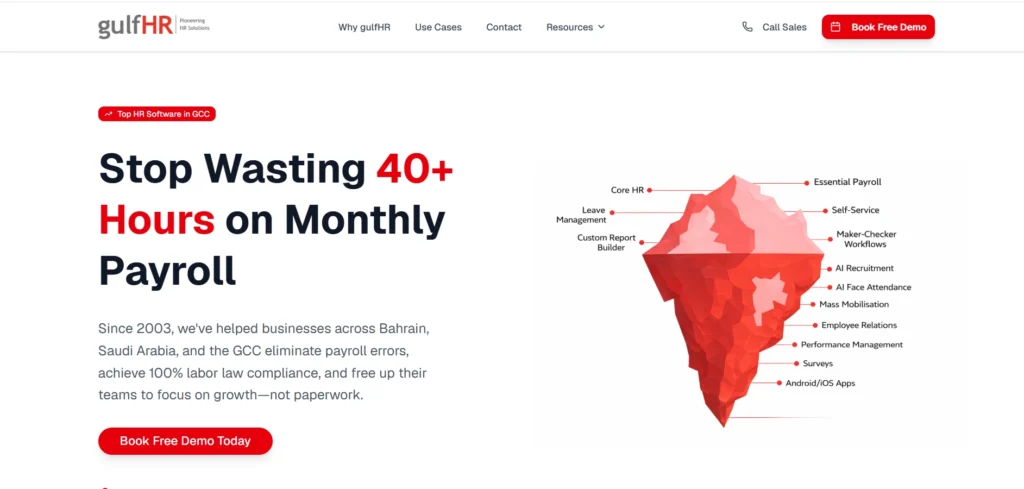
GulfHR is a seasoned, highly mature human resource and payroll management suite engineered specifically to accommodate the complex legal frameworks of Middle Eastern nations, featuring an extensive feature set for Saudi Arabia. As a reliable Payroll Software in Saudi Arabia, the platform is designed to provide massive configuration flexibility, enabling large corporate groups to build highly customized payroll matrices that match their legacy operations. GulfHR stands out for its deep understanding of regional corporate structures, making it highly capable of managing diverse, multi-national workforces operating under various sponsorship and labor rules.
Key Features:
- Highly customizable payroll configuration rules built for multi-tiered corporate entities.
- Full Arabic language user interface support with complete right-to-left alignment across all pages.
- Advanced contract management tools built to track diverse expatriate employment conditions.
- Comprehensive asset tracking module seamlessly tied into the final employee offboarding workflow.
GOSI and WPS/Mudad Compliance
GulfHR addresses Saudi Arabia’s strict regulatory compliance requirements via a powerful, built-in statutory calculation module. The system handles complex GOSI computations for Saudi nationals and handles expatriate occupational hazard metrics effortlessly. It streamlines the generation of complex SIF files, allowing for reliable salary distributions through local banks and smooth compliance clearings across the government’s Mudad system.
Pros:
- Exceptional structural flexibility that easily adapts to highly complex corporate structures.
- Highly reliable platform with a proven track record of handling massive enterprise headcounts.
Cons:
- The user interface looks a bit dated compared to newer, cloud-native software choices.
- System updates and custom layout modifications can take longer to implement.
Pricing:
Enterprise-based pricing structures are provided on demand, tailored directly to your specific modular footprint.
Best For:
Established corporate groups and traditional large enterprises in Saudi Arabia needing a highly stable and customizable payroll system.
8.Qoyod
Website: www.qoyod.com
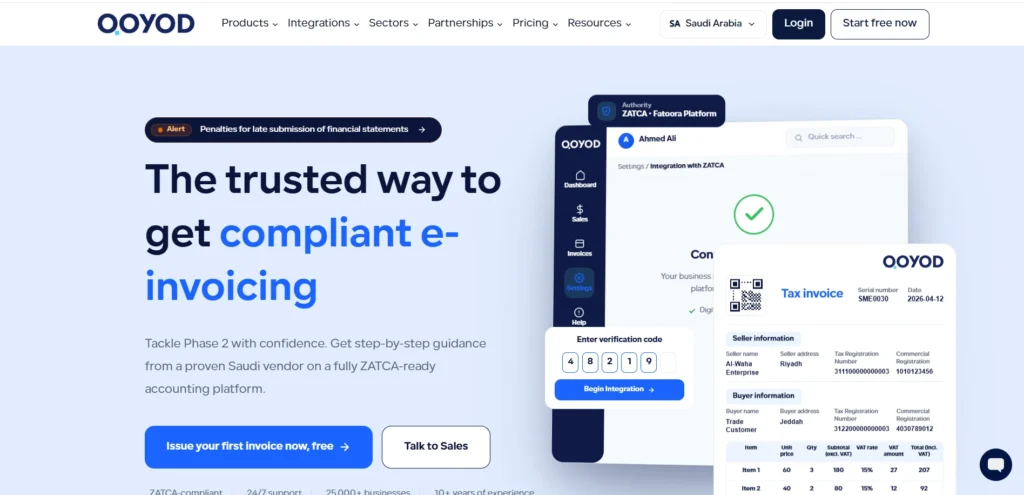
Qoyod is a homegrown cloud-based accounting platform built natively for Saudi Arabian businesses that features a highly accessible, integrated payroll system. It is uniquely engineered to remove the gap between daily bookkeeping and employee compensation processing. By hosting payroll directly inside your primary accounting ecosystem, Qoyod automatically updates your general ledgers, cash flow charts, and operational expense logs the moment a payroll run is approved. This makes it an incredibly cost-effective choice for smaller businesses trying to minimize their software stack.
Key Features:
- Direct, real-time integration between monthly employee payroll and core financial ledgers.
- Clean, user-friendly Arabic and English interfaces built for straightforward financial tracking.
- Automated expense invoice matching linked directly to employee reimbursement workflows.
- Simplified corporate tax tracking designed to support local ZATCA compliance rules.
GOSI and WPS/Mudad Compliance
Qoyod handles local payroll requirements by providing straightforward, pre-validated salary document generation. The system automatically separates basic salaries from standard housing allowances to calculate proper GOSI deductions for local workers. It creates clean, bank-ready SIF files designed for manual or semi-automated uploading into the Mudad portal, helping smaller teams stay compliant without needing complex configurations.
Pros:
- Extremely affordable entry point for small teams that combines payroll and accounting in one package.
- Eliminates the need to build complicated connections between separate accounting and HR software.
Cons:
- Lacks the advanced HR features found in dedicated HRIS platforms, such as deep performance tracking.
- Not suited for massive industrial workforces with highly complex, changing overtime structures.
Pricing:
Available on request
Best For:
Saudi startups, small retail shops, and growing micro-SMBs seeking a simple, budget-friendly combo of accounting and basic payroll.
9.Mercans (G2N Nova)
Website: www.mercans.com
Mercans is a dominant global payroll powerhouse that delivers an enterprise-grade SaaS engine called G2N Nova, configured specifically to support multinational corporations operating inside Saudi Arabia. Built for scale, security, and global compliance, Mercans handles the administrative burdens of massive organizations managing across multiple borders. The platform boasts rigorous international data security certifications (including SOC 1 and SOC 2 audits), providing major corporate entities with total privacy, deep audit trails, and data safety when processing large-scale, high-volume financial data.
Key Features:
- Enterprise-grade, highly secure global data architecture featuring rigorous SOC auditing.
- Native support for dual Hijri and Gregorian calendar processing across all payroll tools.
- Powerful retrospective calculation engine that handles back-dated salary adjustments automatically.
- Advanced multi-currency gross-to-net financial processing built for multinational teams.
GOSI and WPS/Mudad Compliance
Mercans enforces strict compliance through its interconnected Saudi Compliance Chain framework. The system constantly cross-references active payroll metrics with authenticated Qiwa employment contracts to eliminate data mismatches. It automatically handles exact GOSI calculations and directly generates flawless, bank-standard SIF files for error-free processing through the Mudad Wage Protection System, keeping large organizations fully protected against non-compliance risks.
Pros:
- Unrivaled security architecture and capability to manage massive, multi-country corporate payrolls.
- Handles complex backdated contract changes and multi-currency transactions without manual calculation errors.
Cons:
- The platform’s vast enterprise footprint is overly heavy and complex for small, local businesses.
- Implementation timelines take longer due to strict configuration and data security testing protocols.
Pricing:
Custom enterprise pricing models are provided following a comprehensive technical scope review by their corporate sales team.
Best For:
Multinational corporations, large foreign-invested firms, and massive Saudi enterprises requiring elite data security and multi-country payroll management.
10. PalmHR
Website: www.palmhr.net
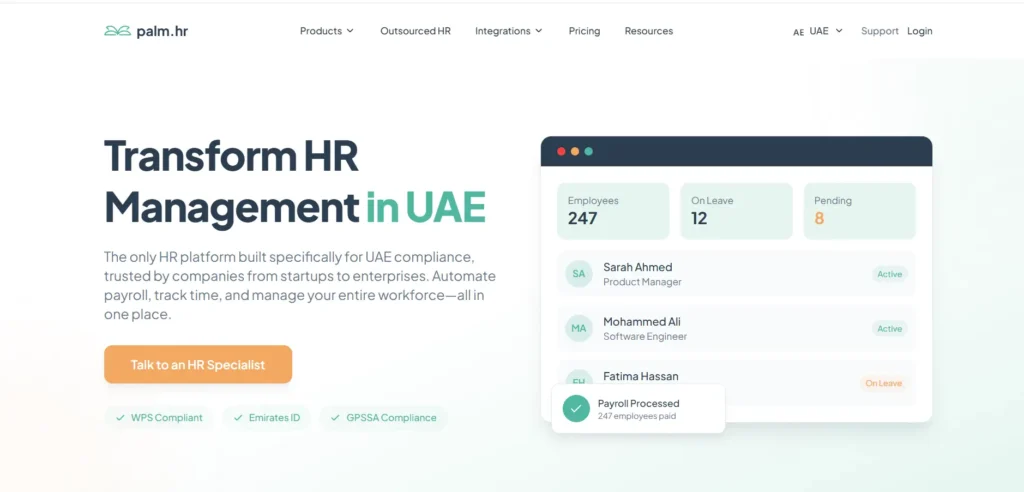
PalmHR is a sleek, modern, cloud-enabled payroll and workforce management platform officially certified and deeply embedded into the Saudi Arabian government digital ecosystem. As an innovative Payroll Software in Saudi Arabia, PalmHR is designed to drastically reduce the time spent on HR workflows through direct API integrations with critical state portals, turning complicated administrative tasks into instant background actions. The software completely replaces messy document binders by securely storing commercial registrations, national IDs, and residency visas in a centralized cloud vault, providing automated alerts long before critical documents expire.
Key Features:
- Direct, certified API integrations linking internal payroll with essential Saudi government portals.
- Automated corporate document tracking with smart notifications for Muqeem and CR renewals.
- Simplified leave management workflow with automated holiday balance tracking.
- Clean, consumer-grade mobile applications allowing instant employee expense and leave uploads.
GOSI and WPS/Mudad Compliance
PalmHR offers an incredibly advanced compliance layer via direct system communication with Mudad and Qiwa. The system automatically processes the 21.75% GOSI retirement deductions for local citizens alongside the 2% workplace injury premium for foreign nationals. Because of its deep integration, generating, verifying, and preparing WPS-compliant SIF files requires zero external filtering, keeping your corporate compliance status securely within green bands.
Pros:
- Direct government integration layers eliminate manual data moving and external portal jumping.
- An ultra-modern, user-friendly interface that requires virtually zero user training to master.
Cons:
- Advanced customization options for highly unorthodox compensation styles can be slightly rigid.
- Premium pricing tier can be restrictive for early-stage startups managing tight operational budgets.
Pricing:
Subscription plans start on a per-employee, per-month fee structure, customized upon requesting a formal platform evaluation.
Best For:
Tech-forward Saudi organizations and fast-growing companies that prioritize cutting-edge UI design and direct, automated government portal integrations.
Explore more
Key Features to Look for in Payroll Software in Saudi Arabia
Selecting the right Payroll Software in Saudi Arabia requires moving beyond generic HR tools to find a platform designed specifically for the Kingdom’s corporate environment. The right software must balance strict government compliance with automated daily workflows to minimize manual interventions.
Look for these essential capabilities to ensure your payroll system runs smoothly, remains legally compliant, and scales effectively in 2026.
1. Native Mudad and WPS File Generation
The software must generate the highly specific Standard Information File (SIF) required for the Wage Protection System with a single click. It should feature a direct, native API integration with the Mudad platform, allowing you to upload payroll files, track digital salary confirmations, and resolve contract mismatches instantly without manually transferring files back and forth.
2. GOSI Auto-Calculation and Submission
An effective system automatically tracks changing contribution rates and handles the 21.75% deductions for Saudi nationals and the 2% occupational hazard tracking for expatriates. The system should adjust calculations based on updates to base salaries and housing allowances, while automatically syncing this payroll data with the official GOSI portal every month.
3. Nitaqat / Saudization Tracking Dashboard
Your payroll platform should feature a live dashboard that monitors your current metrics against your specific industry benchmarks. By analyzing active payroll and contract data, it should visually map your standing across the Platinum, Green, or Red Nitaqat color bands, warning HR leaders well in advance if an upcoming departure or new hire risks dropping the company into a restrictive tier.
4. Arabic Language Interface (Full RTL Support)
Because your workforce and HR teams likely include both native Arabic speakers and expatriates, full bilingual capability is a must. The software should offer seamless Right-to-Left (RTL) interface translation for the entire backend management system, legal contracts, salary statements, and compliance reports.
5. End-of-Service Benefit Automation
Calculating the End-of-Service Benefit (EOSB) manually is highly prone to errors due to the complex rules governing resignation versus termination. The platform should automatically calculate running financial accruals on your balance sheets, adjusting payouts based on the employee’s exact years of service and contract type according to Saudi Labor Law.
6. Employee Self-Service (ESS) Portal
An intuitive self-service portal frees up HR teams by allowing employees to manage their own requests. Through the portal, workers can view compliant payslips, request salary certificates required by local banks, apply for leave, and track their accrued benefits without needing to submit manual paperwork.
Along with payroll automation, modern organizations are also adopting solutions for Customer Engagement to improve communication, employee experience, and internal feedback systems.”
7. Biometric Attendance Integration
To prevent payroll leaks, the software should plug directly into your office biometric hardware or geofenced mobile check-in tools. This allows the system to instantly convert physical attendance, lateness, and shifts into accurate, compliance-ready overtime payments and deduction calculations.
8. Multi-Currency and Multi-Entity Support
For scaling businesses or conglomerates operating across different regions and free zones, managing multiple commercial registrations (CRs) is vital. The system must support consolidated payroll management across distinct legal entities while processing payouts in Saudi Riyals (SAR) alongside other global or regional currencies.
9. Cloud Access and Mobile App (iOS and Android)
A modern payroll solution must offer secure, cloud-based access coupled with dedicated mobile applications for both iOS and Android. This ensures that field employees, remote workers, and traveling executives can log attendance, submit expense claims, and review or approve corporate payroll runs from anywhere at any time.
10. Integration with Accounting Software (Tally, QuickBooks, SAP, Oracle)
To eliminate manual data entry, your payroll engine needs robust integration layers with major Enterprise Resource Planning (ERP) and accounting platforms. It should automatically post complex journal entries for salaries, GOSI liabilities, and EOSB reserves directly into systems like Tally, QuickBooks, SAP, or Oracle, keeping your financial records perfectly balanced.
How to Choose the Right Payroll Software for Your Business in Saudi Arabia?
Finding the perfect payroll platform requires looking beyond generic software to find a tool that aligns with your specific industry, headcount, and growth trajectory. The ideal system must balance everyday operational ease with strict adherence to the Kingdom’s evolving regulatory landscape.
Consider these critical evaluation checkpoints before making your final platform investment:
- Verified Local Compliance Certifications: Ensure the software has direct, certified integration with Mudad, Qiwa, and Muqeem portals to seamlessly handle the Wage Protection System (WPS) and GOSI calculations without requiring external file conversions.
- True Bilingual and RTL Support: The platform must offer a complete, natural Arabic and English interface across both the HR backend and the Employee Self-Service (ESS) app to cater smoothly to a diverse, localized workforce.
- Scalability and Configuration Depth: Choose a system that can adapt to your shifting allowance policies, complex overtime rules, and running End-of-Service Benefit (EOSB) accruals as your business adds legal entities or shifts industries.
- Data Residency and Security Compliance: Verify that the vendor complies with Saudi Arabia’s local cloud computing regulatory frameworks by safely hosting sensitive corporate financial data and employee records within geographic borders.
- Robust ERP Integration Layers: Opt for a platform that links directly via APIs to your existing accounting tools (such as SAP, Oracle, Tally, or QuickBooks) to automate journal entries and eliminate manual bookkeeping errors.
Common Payroll Mistakes Saudi Businesses Make (And How Software Fixes Them)
Even seasoned HR departments can fall victim to operational errors due to the fast-paced, highly digitized nature of Saudi Arabia’s labor regulations. Relying on outdated manual processes or disconnected software systems often leads to compliance gaps that disrupt daily operations.
Modern payroll software directly targets and eliminates these operational risks through automated safeguards:
- Incorrect GOSI Calculations: Manual tracking often fails to update changing contribution rates or separate basic salaries from housing allowances, whereas software locks in exact rules to split the mandatory 21.75% local deduction automatically.
- WPS File Format Rejections: Uploading flawed Standard Information Files (SIF) to the Mudad platform instantly freezes salary approvals, but dedicated software generates pre-validated files that match exact bank and state guidelines.
- Miscalculating Complex EOSB Accruals: HR teams frequently miscalculate final payouts when an employee resigns instead of being terminated, while an automated ledger tracks running service history to apply precise labor law multipliers.
- Failing to Sync with Live Qiwa Contracts: Discrepancies between internal payroll sheets and officially registered Ministry agreements lead to auditing red flags, which integrated platforms prevent via real-time digital contract matching.
- Ignoring Live Nitaqat Band Ratios: Outdated spreadsheets can leave a business blind to sudden changes in localization metrics, but smart compliance dashboards provide early warnings before a drop in headcount impacts recruitment visas.
Cloud-Based vs. On-Premise Payroll Software in Saudi Arabia
Deciding between a cloud deployment and an on-premise installation involves weighing operational flexibility against absolute internal infrastructure control. In Saudi Arabia, this choice is heavily guided by strict data governance laws, including the Personal Data Protection Law (PDPL) overseen by SDAIA, which mandates precise handling of local employee information.
The table below contrasts how these two architectural models perform across core operational, financial, and compliance dimensions.
| Evaluation Metric | Cloud-Based Payroll Software | On-Premise Payroll Software |
| Data Residency & PDPL Compliance | Managed by the vendor; requires selecting providers with local Saudi data centers (e.g., AWS Riyadh region) to comply with data localization laws. | Inherently localized; all employee financial records, identities, and salaries stay entirely within your company’s physical, on-site servers. |
| Regulatory Updates (WPS & GOSI) | Automated and instantaneous; the vendor pushes real-time system patches the moment MHRSD or GOSI alters contribution rates or SIF file formats. | Manual implementation required; internal IT departments must code, test, and deploy system upgrades every time a local labor law changes. |
| Financial & Cost Structure | Predictable OpEx (Operating Expenses); features a subscription-based model calculated on a per-user, per-month fee structure. | Heavy upfront CapEx (Capital Expenses); requires substantial initial investments for perpetual software licenses, server hardware, and IT setup. |
| Accessibility & Remote Work | High flexibility; HR teams and field workers can securely log attendance, submit expenses, and process approvals from any location via mobile apps. | Restrictive access; typically requires a physical connection to the office network or complex corporate VPN configurations to manage payroll. |
| Integration with Local Systems | Smooth connectivity; relies on modern web APIs to quickly bridge data with cloud accounting suites and digital government clearinghouses like Mudad. | High customization but complex; requires custom-built database connections to talk to external legacy systems or state interfaces. |
Conclusion
In conclusion, upgrading to a specialized Payroll Software in Saudi Arabia is no longer just a way to make your HR department more efficient—it is a vital step toward protecting your business from costly regulatory penalties in Saudi Arabia. Keeping up with real-time updates from Mudad, Qiwa, and GOSI manually is incredibly difficult and leaves too much room for human error. Automating these workflows ensures that your employees are always paid accurately and on time while keeping your company securely within the government’s green compliance bands.
The right software for your business ultimately depends on your company’s size, your industry, and how complex your allowance structures are. Startups and small teams can easily get by with straightforward tools like Qoyod, while larger corporations or businesses with complex shift rotations will get far more value out of platforms like Jisr, ZenHR, or factoHR. By investing in a platform that natively understands Saudi Labor Law, you can eliminate administrative stress, boost workforce trust, and focus your energy on growing your business in the Kingdom.
FAQs
1. What Is The Deadline For Uploading The Wage Protection System (WPS) File To The Mudad Platform Each Month?
The Ministry of Human Resources and Social Development (MHRSD) enforces strict promptness guidelines. Establishments must upload their wage protection files to the Mudad platform within 30 days of the salary due date. This timeline ensures compliance tracking and prevents automatic operational freezes on your Qiwa or corporate bank profiles.
2. Are Payroll And GOSI Deductions Required For Employees During Their Probation Period?
Yes. Under Saudi Labor Law , an employee on probation has the immediate right to receive full registered wages. Consequently, employers must process standard monthly payroll and report them through Mudad from day one. For Saudi nationals, mandatory GOSI contributions must be calculated and deducted normally during the probation window, which can span a maximum of 180 days.
3. How Does Payroll Software Handle The Calculation Of Public Holiday Overtime Under Saudi Labor Law?
According to Article 107 of the Saudi Labor Law, working during official public holidays (such as Eid Al-Fitr or Eid Al-Adha) or national days qualifies as overtime. Modern payroll systems eliminate calculations by automatically applying the statutory rate: the employee’s regular hourly wage plus an additional premium of 50% of their basic wage.
4. Can A Saudi Employer Deduct Money From An Employee’s Salary Without A Court Order?
A payroll system will prevent unauthorized deductions due to strict statutory caps. Under Article 92 of the Saudi Labor Law, authorized deductions such as home loan repayments, advances, or disciplinary fines cannot exceed 10% of the employee’s net salary at a time. If multiple debts are owed, total deductions can never exceed 25% of the worker’s monthly wage unless a specific judicial authority rules otherwise.
5. Is A Housing Allowance Mandatory In Saudi Payroll, And Does It Affect GOSI Calculations?
While the labor law does not explicitly set a minimum dollar figure for housing, providing either physical accommodation or a cash housing allowance is standard practice in Saudi employment contracts. If a company pays a cash allowance, it must be included in the monthly GOSI calculations. GOSI social security deductions are legally calculated against the sum of the Basic Salary plus the Housing Allowance, up to a maximum regulatory cap of SAR 45,000 per month.
