
One of the most important decisions that should be made when establishing a successful online store is the selection of the right seo ecommerce platforms. As competition levels rise and as the level of customer expectations grows, a website that is visually attractive is no longer sufficient. Your platforms should be quick and mobile with security, and the most important aspect is search engine optimization. This is the point at which search engine optimization for e-commerce sites comes in, and many businesses also collaborate with professional SEO Companies to maximize their store visibility and rankings.
The top 14 seo ecommerce platforms have strong functionalities, including clean URL structure, meta tag customization, schema markup, quick loading, and smooth connection with SEO tools. In this guide, we discuss the best platforms that make your store climb higher and develop sustainably.
Types of E-commerce Platforms
1. SaaS (Software as a Service) / Hosted
Hosting, security, and updates controlled by the provider are cloud-based, subscription platforms, allowing fast setup, usability, and little technical effort.
2. Open-Source / Self-Hosted
Web platforms that allow businesses to control their own hosting, maintenance, and development offer high customization, full control, and flexibility, particularly in teams with high technical skills.
3. Headless E-commerce Platforms
A contemporary architecture, front-end and back-end, enabling flexible omnichannel experiences and highly personalized customer journeys across multiple digital experiences.
4. License-Fee / Enterprise Ecommerce Platforms
Paid, enterprise-level solutions tailored to large enterprises, with advanced features, scalability, customization, and good support of complex, high-volume operations.
List Of 14 Best E commerce Platforms for SEO
1. Shopify

website :https://www.shopify.com/in
Shopify is an online shop business platform that simplifies the process of eCommerce to the extent of making it accessible to even a novice. It does the hosting, security, updates, and speed automatically. SEO Ecommerce Platforms Shopify provides clean URLs, mobile-friendly themes, the use of a global CDN to ensure fast loading, and auto-generated sitemaps, among other features used in SEO.
You are able to change page titles and meta descriptions and add redirects with no technical knowledge. Even though the URL structure is not customizable, Shopify offers a good SEO base to both small and upcoming online stores.
Key Features
- Hosted platforms with automatic updates and security
- Fast loading with global CDN
- Mobile-friendly, SEO-ready themes
- Automatic XML sitemap and canonical tags
- Easy metadata and redirect management
Pros
- Very easy to use for beginners
- Strong site speed and uptime
- No technical maintenance needed
- Good SEO basics built-in
- Large app ecosystem
Cons
- Fixed URL structure
- Advanced SEO needs paid apps
- App costs add up over time.
Pricing:
- Basic: ₹1,499/month (billed yearly)
- Grow: ₹5,599/month (billed yearly)
- Advanced: ₹22,680/month (billed yearly)
- Plus: ₹175,000/month (3-year term)
2. WooCommerce
website :https://woocommerce.com/
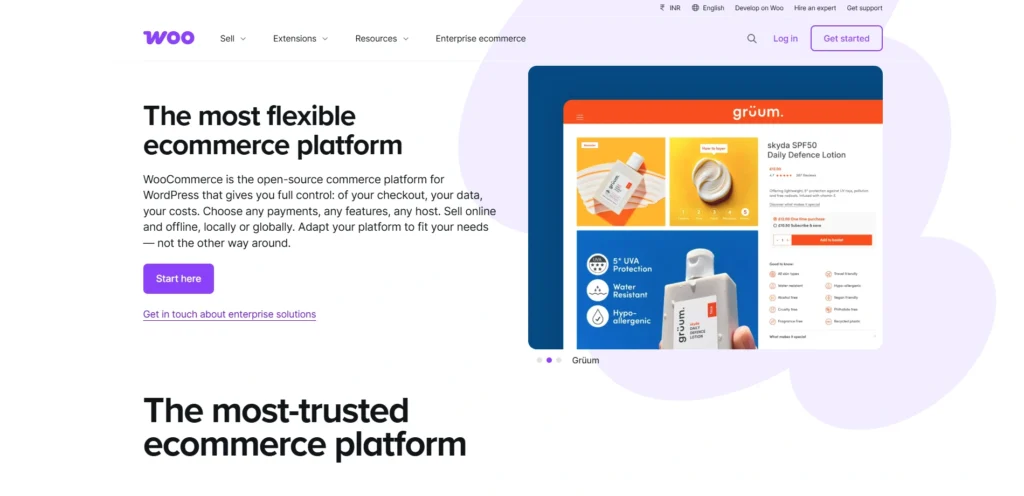
WooCommerce is a WordPress-based e-commerce plugin that provides complete flexibility for SEO. URLs, metadata, schema, and site structure are easily customizable. It favors potent SEO extensions such as Yoast and Rank Math.
It is free to use and perfect for content-based search engine optimization through blogs. Nevertheless, hosting and setup determine performance and security. It is best suited to users who are flexible and do not feel afraid to deal with technicalities.
Key Features
- Full control over URLs and metadata
- Works with powerful SEO plugins
- WordPress blogging integration
- Access to robots.txt and server rules
- Free core software
Pros
- Complete SEO flexibility
- Excellent for content marketing
- Large plugin ecosystem
- No platforms restrictions
- Free to install
Cons
- Needs technical knowledge
- Performance depends on hosting.
- No official support team
Pricing:
- ₹1373.59 per month
3. BigCommerce
website :https://www.bigcommerce.com/
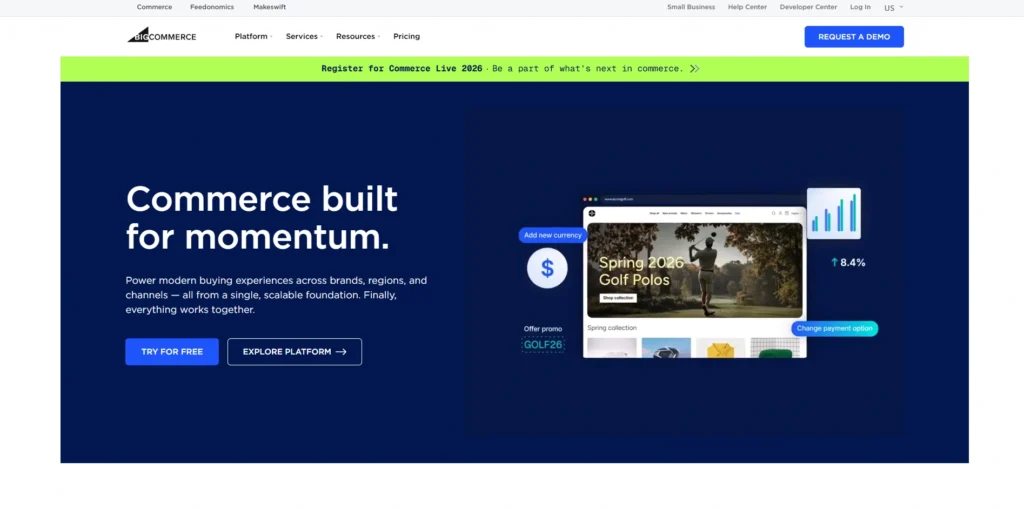
BigCommerce is a hosted application that has numerous SEO features integrated into the system. It provides configurable URLs, product markups, canonical markups, redirects, and XML sitemaps without applications. BigCommerce can manage product catalogs of a large size and provides adequate crawl and indexing control.
Mobile performance and page speed are superior by default. It will be an excellent option when expanding companies that do not need extensive SEO features as much, depending on the plugins.
Key Features
- Built-in product schema
- Customizable URLs and redirects
- Strong handling of large catalogs
- SEO tools without apps
- Good crawl and index control
Pros
- SEO features built into the core
- Scales well for growing stores
- Strong technical SEO setup
- Less app dependency
- Good site performance
Cons
- Advanced plans are costly.
- Limited schema customization
- Smaller community than Shopify
Pricing:
- Standard: $29per month,
- Plus:$79per month
- Pro (Most Popular): $299per month
4. Zoho Commerce
website :https://www.zoho.com/
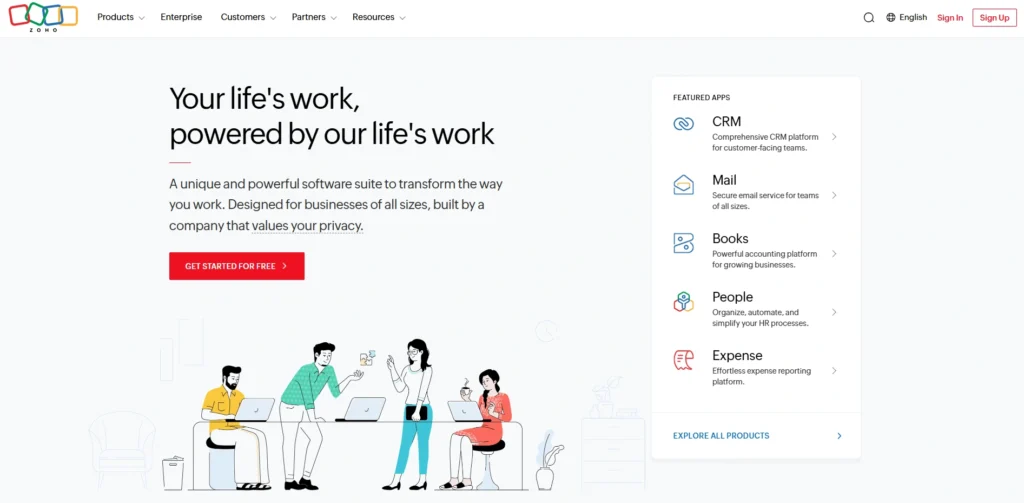
Zoho Commerce provides integrated SEO services with the support of AI. It is easy to edit the URLs, meta titles, descriptions, and sitemaps and robots. text. It does not oppose multilingual and multi-country stores, as it promotes international SEO.
AI can be used to create product descriptions and schemas that are search engine-friendly. It is flexible but has fewer integrations when compared to bigger platforms. Zoho Commerce is available to those who are interested in straightforward management of SEO using a single dashboard.
Key Features
- Central SEO dashboard
- AI-generated SEO descriptions
- Multilingual and multi-country SEO
- Editable robots.txt and sitemaps
- SEO-friendly blog support
Pros
- Easy SEO management
- Good for international stores
- AI saves time on content.
- Clean admin interface
- Affordable pricing
Cons
- Limited integrations
- AI content needs review
- Smaller ecosystem
Pricing:
- Standard Plan: ₹599/month
- Professional Plan: ₹1,799/month
- Premium Plan: ₹3,999/month
5. Magento

website :https://www.magestore.com/
Adobe Commerce, previously called Magento, is an intensive seo ecommerce platform that targets large and complex stores. It provides complete manipulation of SEO, such as URLs, metadata, schema, sitemaps, and server settings.
It facilitates the use of multi-store and multi-language search engine optimization on a single back-end. Magento needs technical skills and maintenance. Unless it is configured in the right way, SEO performance may suffer. It is preferred in large businesses that have developers.
Key Features
- Full SEO customization access
- Multi-store and multi-language support
- Advanced URL and schema control
- Headless and PWA-ready
- Enterprise-grade scalability
Pros
- Best for complex SEO needs
- Excellent for global stores
- Total backend control
- Highly customizable
- Strong enterprise tools
Cons
- Steep learning curve
- High development costs
- Requires constant maintenance
Pricing:
- Connect with the sales team
6. Wix

website:https://www.wix.com/
Wix is an easy-to-use platform that has built-in search engine optimization tools and an SEO wizard. It is easy to edit titles, meta descriptions, URLs, and image alt text. Wix is automated and creates XML sitemaps and has HTTPS and mobile optimization. It also facilitates product schema.
There is a lack of advanced SEO control, such as hreflang and access to the server. Wix is suitable for small businesses and startups that only require basic search engine optimization.
Key Features
- SEO Wizard with suggestions
- Editable titles, metas, and URLs
- Automatic sitemap generation
- Mobile-friendly templates
- Built-in product schema
Pros
- Beginner-friendly
- Fast setup
- Built-in SEO guidance
- No technical skills needed
- Good for small stores
Cons
- Limited advanced SEO control
- No server-level access
- Page speed can vary.
Pricing:
- Business Elite – ₹1,800/mo
- Business (Recommended) – ₹900/mo
- Core – ₹500/mo
- Light – ₹250/mo
7. Squarespace

website :https://www.squarespace.com
Squarespace aims for design and simplicity, including the simplest features of search optimization. You are able to personalize URLs, titles, and meta descriptions. It offers automatic sitemaps, the use of SSL, mobile-friendly themes, and a clean HTML structure.
But robots.txt and more complicated schema settings cannot be edited by users. Squarespace is appropriate in the case of small stores, which care about design and do not need technical effort to optimize their businesses, but cannot provide advanced SEO strategies.
Key Features
- Clean HTML structure
- Custom URLs and metadata
- Automatic sitemaps and SSL
- Mobile-responsive designs
- Built-in CDN
Pros
- Great design quality
- Easy to manage
- Secure by default
- Good basic SEO
- No plugins needed
Cons
- No robots.txt access
- Limited schema control
- Weak international SEO
Pricing:
- Basic– ₹630 / month
- Core– ₹720 / month
- Advanced- ₹1,100 / month
8. PrestaShop

website :https://prestashop.com/
PrestaShop is an open-source e-commerce platform that provides adequate control in SEO, which is not demanding with heavy code. The meta titles, descriptions, URLs, canonical tags, and multilingual SEO can be edited by the users. It serves international stores that are multi-currency-supported. It is also one of the effective SEO Ecommerce Platforms for flexible online store optimization.
Most sophisticated search engine optimization software is paid, and the performance is dependent on hosting. PrestaShop can be considered a decent mid-range option for small and mid-sized businesses that would like to be flexible and yet not as complex as an enterprise.
Key Features
- Editable metadata and URLs
- Multilingual and multi-currency SEO
- Manual sitemap and redirect control
- Open-source flexibility
- GDPR-friendly setup
Pros
- Good international SEO
- More control than SaaS tools
- Free core software
- Lightweight platforms
- Customizable SEO
Cons
- Paid modules needed
- Performance depends on hosting.
- Limited official support
Pricing:
- CLASSIC — Free Download
- HOSTED — From €24/month
- ENTERPRISE — From €2,115/month
9. Shift4Shop

website :https://www.shift4shop.com/
Shift4Shop offers a powerful built-in search engine optimization without the use of additional software. It provides complete metadata editors, schema markup, sitemaps, canonical elements, redirects, and access to robots. text. The platform has HTTPS and a CDN to increase speed and security.
SEO also has functions provided on the admin panel. Nevertheless, there is a smaller community and ecosystem of apps. The Shift4Shop is handy in case companies prefer Shopify-like convenience with additional freedom in search engine optimization.
Key Features
- Built-in SEO tools
- Full metadata and URL control
- Native schema markup
- Robots.txt and redirect access
- HTTPS and CDN included
Pros
- No plugins required
- Strong SEO control
- Affordable pricing
- Good site speed
- Simple admin panel
Cons
- Smaller community
- Limited templates
- Less flexible for enterprises
Pricing:
- Connect with the sales team
10. Ecwid

website :https://www.ecwid.com/
Ecwid is an e-commerce add-on that allows you to sell on existing websites. It produces schema, metadata, and mobile-responsive product pages, which generate SEO. It has support for social meta tags and HTTPS. The platform of SEO relies on the primary website, and the control of canonical is restricted. SEO Ecommerce Platforms like Ecwid are most suitable for content-first websites that do not wish to reconstruct their whole website to enable selling opportunities.
Key Features
- Embeddable store widgets
- Automatic product schema
- Editable metadata
- Mobile-ready and secure
- Social meta tag support
Pros
- Easy to add to existing sites
- Fast loading
- Good basic SEO
- Affordable plans
- No site rebuild needed
Cons
- Limited SEO depth
- No canonical control
- Depends on host platforms
Pricing:
- Starter — ₹450/month (For beginners)
- Venture — ₹1,399/month (For solo visionaries)
- Business — ₹2,499/month (For small teams)
- Unlimited — ₹6,399/month (For growing businesses)
11. Volusion

website :https://www.shift4shop.com/
Volusion contains an SEO dashboard with the help of which it is easy to set metadata, URLs, and redirects. It offers automatic sitemaps, canonical tags, and product and category SEO. The software is accessible and is not dependent on plugs.
It does not have profound server-level SEO management and sophisticated schema manipulation. Volusion can be used in mid-sized stores that do not need technical complexity in their guided SEO tools.
Key Features
- SEO dashboard
- Editable metadata and URLs
- Automatic sitemaps
- Redirect manager
- SEO performance insights
Pros
- Easy SEO monitoring
- No plugins needed
- Clean admin interface
- Good for mid-size stores
- Built-in SEO guidance
Cons
- Limited server control
- Weak international SEO
- Smaller extension library
Pricing:
- Personal — $35/mo
- Professional — $79/mo
- Startup — $179/mo
- Business — $299/mo
12. Weebly
website :https://www.weebly.com/
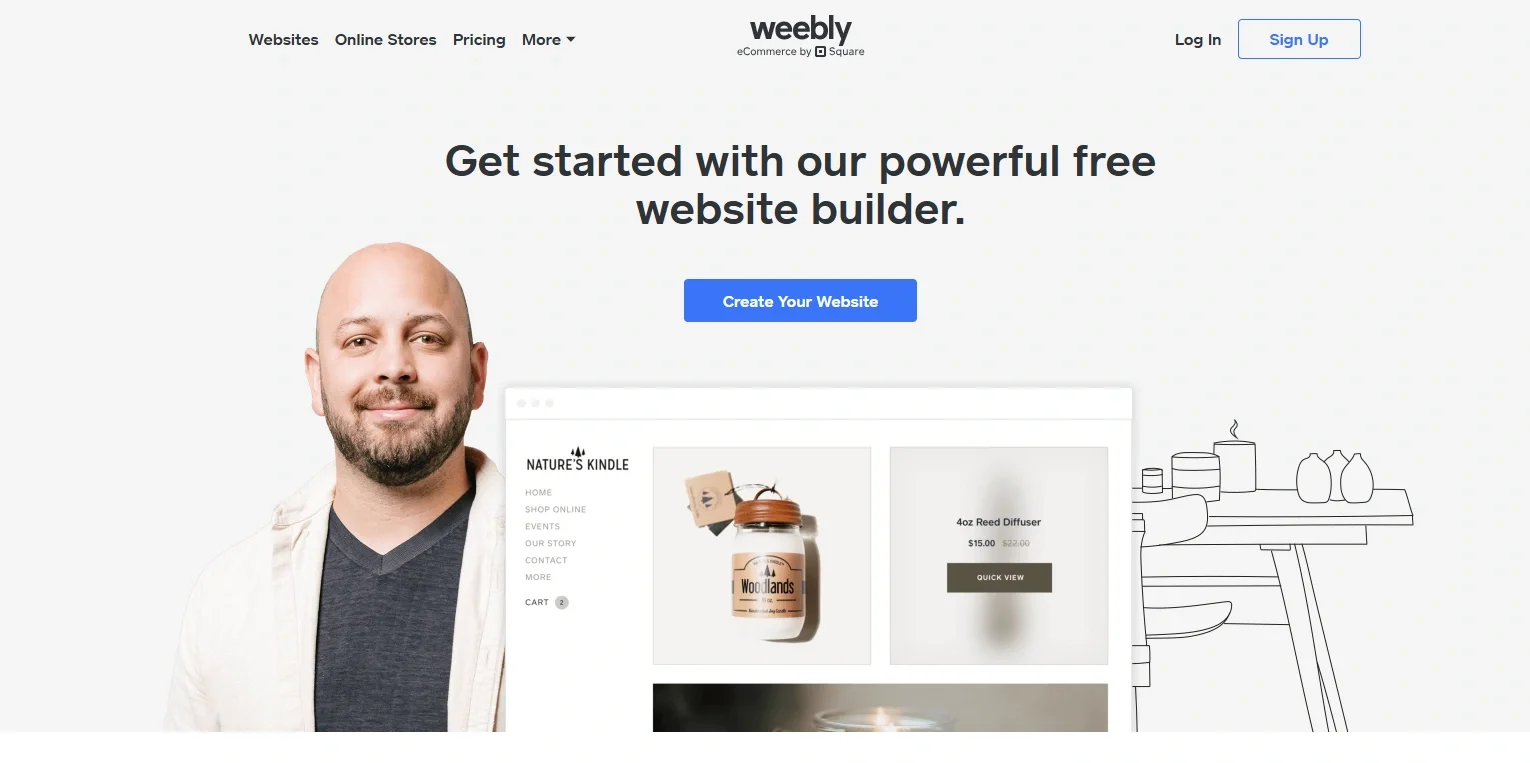
Weebly has easy-to-use SEO functions that are user-friendly. Users are able to edit the page titles, meta descriptions, URLs, and image alt tags. It also generates sitemaps and canonical tags and offers SSL security automatically. An SEO ecommerce platform
The templates are mobile-friendly. There are no such advanced SEO features as schema customization, hreflang, and server access. Weebly is suitable for small stores with simple SEO and simple growth strategies.
Key Features
- Simple SEO editing tools
- Auto sitemap and canonical tags
- Mobile-friendly templates
- SSL security
- Built-in SEO tips
Pros
- Very easy to use
- Good for beginners
- Secure by default
- No technical setup
- Affordable plans
Cons
- No advanced SEO features
- No schema control
- Limited scalability
Pricing:
- Personal — $10/mo (or $13 month-to-month)
- Professional — $12/mo (or $16 month-to-month)
- Performance — $26/mo (or $29 month-to-month)
13. GoDaddy
website:https://www.godaddy.com/en-in
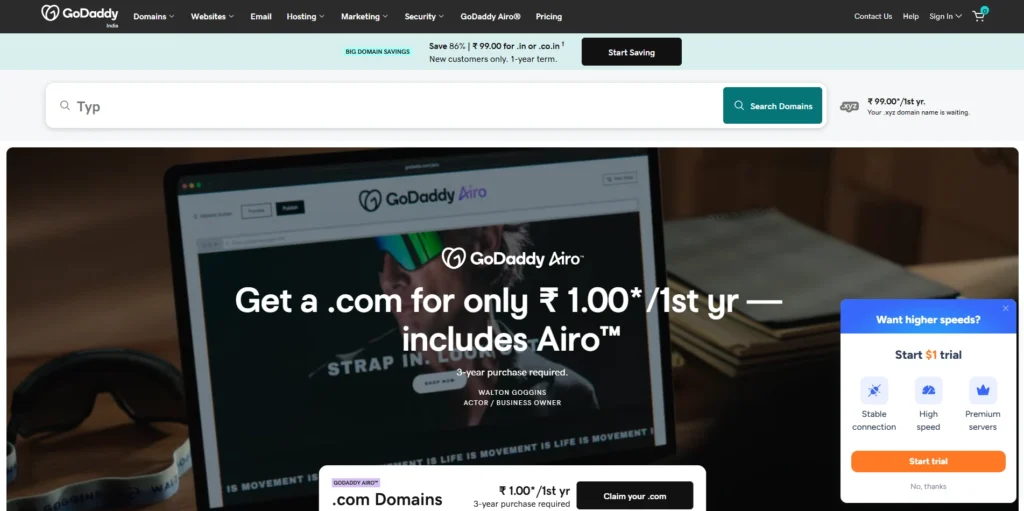
The eCommerce platforms provided by GoDaddy is primarily based on local SEO. It provides an SEO wizard, keyword suggestions, and connections with local business directories. This aids small businesses in being better seen in the local search results.
They are HTTPS and mobile optimization. But there are limited product-level SEO controls, sitemaps, schema, and canonical editing. GoDaddy is not suitable for big online stores but rather for small businesses with locations.
Key Features
- SEO wizard
- Local SEO tools
- Directory integrations
- Mobile-optimized hosting
- Keyword suggestions
Pros
- Strong local SEO focus
- Easy setup
- Good for small businesses
- HTTPS included
- Simple interface
Cons
- Weak product SEO
- No schema support
- Not suitable for large stores
Pricing:
- Discount Domain Club — from ₹ 942.46/mo (annual)
- Domain Broker Service — ₹16,999/domain + 20% commission
14. Big Cartel

website:https://www.bigcartel.com/
Big Cartel is oriented to artists and other small creators whose product lineups are simple. It enables editing the page titles and meta descriptions, and it also supports Google Search Console. The pages are not heavy and are loaded fast. SEO Ecommerce Platforms make it easier to optimize for search engines.
It does not have advanced SEO functionality such as schema markup, redirects, and XML sitemaps. Big Cartel can be used in extremely small businesses that do not require a complicated SEO setup.
Key Features
- Editable titles and meta descriptions
- Clean URLs
- Google Search Console support
- Fast-loading pages
- Secure hosting
Pros
- Very simple to use
- Free plan available
- Good page speed
- No hidden fees
- Ideal for creators
Cons
- No schema markup
- No redirects or sitemaps
- Limited SEO tools
Pricing:
- Gold — $0/mo
- Platinum — $15/mo (Most Popular)
- Diamond — $30/mo
Comparison Table of Top SEO-Friendly E-commerce Platforms
| Platforms | Type | SEO Control | Built-in SEO Features | Best For | Pricing (Starting) |
|---|---|---|---|---|---|
| Shopify | SaaS (Hosted) | Medium | Sitemap, CDN, meta tags | Beginners & SMBs | ₹1,499/mo |
| WooCommerce | Open-Source | Very High | Plugins (Yoast, RankMath) | Bloggers & SEO-focused stores | ₹1,373/mo |
| BigCommerce | SaaS (Hosted) | High | Built-in schema, URLs, sitemaps | Growing businesses | $29/mo |
| Zoho Commerce | SaaS (Hosted) | Medium | AI SEO tools, meta control | Small businesses | ₹599/mo |
| Magento (Adobe Commerce) | Open-Source/Enterprise | Very High | Advanced SEO, multi-store | Large enterprises | Custom |
| Wix | SaaS (Hosted) | Basic | SEO wizard, sitemap | Beginners | ₹250/mo |
| Squarespace | SaaS (Hosted) | Basic | Clean HTML, sitemap | Design-focused stores | ₹630/mo |
| PrestaShop | Open-Source | High | Meta, URLs, multilingual SEO | SMBs needing flexibility | Free / €24/mo |
| Shift4Shop | SaaS (Hosted) | High | Built-in SEO tools, schema | Budget-friendly businesses | Custom |
| Ecwid | SaaS (Addon) | Medium | Schema, metadata | Existing websites | ₹450/mo |
| Volusion | SaaS (Hosted) | Medium | SEO dashboard, sitemap | Mid-size stores | $35/mo |
| Weebly | SaaS (Hosted) | Basic | Sitemap, meta tags | Small stores | $10/mo |
| GoDaddy | SaaS (Hosted) | Basic | SEO wizard, local SEO | Local businesses | ₹942/mo |
| Big Cartel | SaaS (Hosted) | Basic | Meta tags, clean URLs | Creators & artists | Free |
Key Factors When Choosing an E-commerce Platforms for SEO
- Mobile Optimization –Your platforms should be flawless on mobile, responsive in design, and simple to navigate because search engines favor mobile-friendly e-commerce websites.
- Site Speed – Quick-loading web pages enhance search positions and user experience that can be used to reduce bounce rates and boost conversions on your e-commerce site.
- Customizable URLs & Meta Tags –It should not require advanced technical expertise to edit URLs, titles, meta descriptions, and image alt text to target keywords.
- In-built Blogging Facilities- The benefits of integrated blogging are posting SEO-friendly content regularly, generating organic traffic, and ranking in informational keywords about your products.
- Indexing & Crawl Control- Control sitemaps, robots files, canonicals, and no index tags that assist the search engines in crawling important pages in the right way.
- SSL Security- SSL certificates secure user information, create trust, and improve search rankings since they make sure that your e-commerce site operates on HTTPS.
Ending Note
The choice of the most suitable 14 SEO eCommerce sites is finally determined by your business objectives, finances, technical level, and development strategies. A SEO ecommerce platforms can provide you with a lasting competitive edge through generating a steady organic flow of traffic and lessening reliance on paid advertising.
Spend time analyzing the strengths, scalability, and search engine optimization of each platforms before deciding. The combination of the right platforms and intelligent SEO use will help your eCommerce store rank higher, capture the right audience, and achieve sustainable online success.
FAQs
1. What Is The Importance Of SEO To E-commerce Websites?
SEO assists online stores to gain positions, traffic, exposure, low advertisement expenses, and long-term sales growth steadily.
2. What Makes An E-commerce Platforms SEO-Friendly?
The growth is achieved by a fast and mobile-friendly eCommerce platforms with custom metadata, clean URLs, and robust technical SEO controls.
3. Does The E-commerce Platforms Affect Search Rankings?
Yes, the platforms affects search functionality by site velocity, cellular functionality, indexing authority, URL layout, and technical execution to rank successfully.
4. Are Hosted Or Open-Source Platforms Better For SEO?
They are both effective; however, open-source provides flexibility, and the hosted platforms are less cumbersome to manage and faster to set up as businesses expand.
5. Is changing E-commerce Platforms A Solution To Better SEO?
Yes, platforms migration can enhance SEO, well done, when it is done cautiously, with correct redirects, content maintenance, and technical checks to prevent losses.
